Buying a House with a 20-Year Mortgage: Opportunity or Burden?

Buying a house is a significant decision, especially for young families or those with average incomes. A 20-year mortgage can be the key to opening the door to homeownership, but it also carries potential risks if not carefully prepared for. This article will delve into this issue, helping you make the wisest choice.

Overview of a 20-Year Mortgage
A 20-year mortgage is a popular form of financing that allows buyers to own their dream home without having to pay a large sum of money upfront. With a long loan term, monthly payments are usually more manageable, making it suitable for many Vietnamese families’ finances.
However, a loan agreement lasting two decades requires careful consideration of many factors. Fluctuating interest rates, changing financial capabilities, and unforeseen expenses can turn the dream of homeownership into a heavy debt burden.
Benefits of a Long-Term Mortgage
First, the most obvious benefit of taking out a 20-year mortgage is reducing monthly financial pressure. With a long repayment term, the amount of principal and interest you have to pay each period will be significantly lower than with short-term loan packages. Therefore, you can easily balance income and expenses, maintaining a stable life.
In addition, owning a home sooner brings peace of mind and stability. You no longer have to worry about renting or moving. Furthermore, real estate values tend to increase over time; the house you buy today can become a profitable investment in the future.
For example, a young couple can buy an apartment for 1 billion VND, borrowing 70% for 20 years. The loan of 700 million VND, divided equally over 240 months, will help them manage their finances more easily.
Potential Risks to Consider
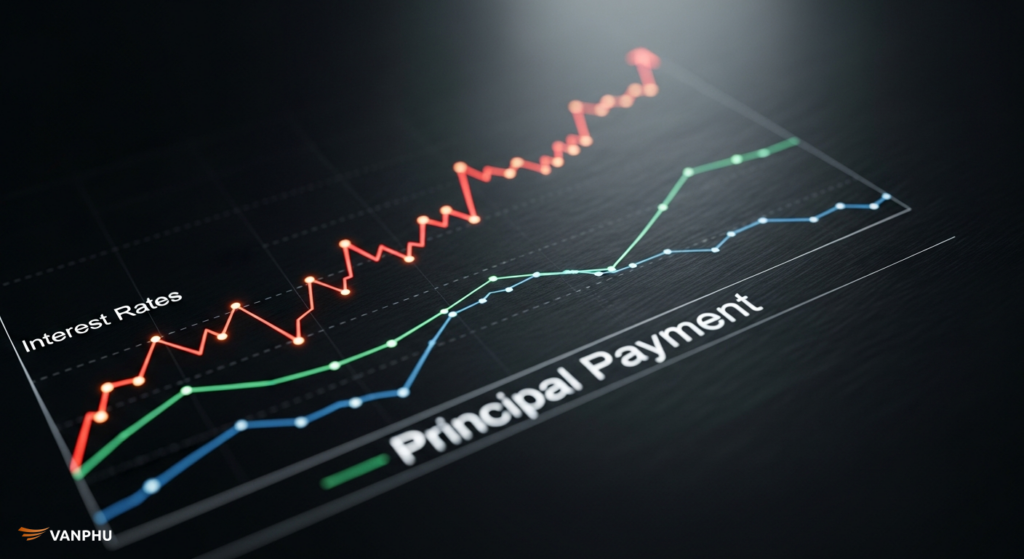
However, not everyone can easily overcome the 20-year repayment journey. One of the biggest risks is fluctuating interest rates. As in the case of Ms. Bich in Bac Ninh, she initially had to pay 6.5 million VND/month with a preferential interest rate, but after the preferential period ended, the payment increased to nearly 10 million VND, with interest alone reaching 6.2 million VND. This happened because the loan interest was calculated using the 13-month term savings interest rate plus a margin of 3.9%, and the savings interest rate had increased sharply. This is a valuable lesson about being subjective when taking out a home loan.
In addition, finding additional income to repay the loan early or cope with unexpected expenses is not easy. Mr. Thach in Phuc Tho, Hanoi, despite careful calculations, still faced difficulties when some acquaintances demanded debts of 20-40 million VND. Finding extra work was not as expected, putting him and his wife under more pressure.
In summary, a loan of 6 million VND to the bank, plus 3 million VND to acquaintances, totaling 9 million VND per month, is a significant burden. This pressure increases further when there is a risk of unexpected debt collection.
Advice from Real Estate Experts
Mr. Nguyen Duc Thinh, a real estate consultant, said that many home buyers choose to borrow up to 70% of the apartment’s value. Investors often offer 0% interest rate support packages in the first year or preferential interest rates in the first 12-18 months, then calculate based on the 13-month term savings interest rate plus a margin of 3-4%/year. However, he also emphasized, “Eager to have their own home, many people rush to buy, then try to work hard to pay off early.”
Mr. Thinh also warned that a year of enjoying preferential treatment passes very quickly. When it comes time to pay full interest, with an amount equal to 1/2 of their income, many people truly feel the heavy pressure. Some even feel they have been “deceived” because the initial calculations are no longer appropriate.
Factors to Consider Before Taking Out a Home Loan
To avoid falling into a situation of “getting bogged down in debt,” you need to pay attention to the following points:
1. Research Interest Rates Thoroughly
First, understand how interest rates are calculated. Most mortgage packages initially have preferential interest rates, but then increase according to the market. Ask clearly about the interest rate adjustment margin, the reference savings interest rate, and the factors that can increase the interest rate. Also, research fixed interest rate packages for better security.
2. Assess Your Actual Financial Capacity
Don’t just rely on your current income. Carefully calculate your financial capacity over the next 20 years. Include possible changes such as job changes, medical expenses, or other unexpected expenses. Have a reserve for emergencies.
3. Plan to Repay the Loan Early
If possible, plan to repay the loan early. This not only helps you reduce the burden of loan interest but also shortens the repayment period. Look for opportunities to work extra or save expenses to have more money to put towards principal.
4. Read the Contract Carefully
Before signing any loan agreement, read each clause carefully. Pay particular attention to the clauses regarding interest rates, prepayment penalties, and other regulations. If something is unclear, do not hesitate to ask the consultant or seek professional legal advice.

5. Consider Borrowing with an Appropriate Ratio
Instead of borrowing 70% of the house’s value, consider borrowing with a lower ratio, for example, 50% or 60%. This will help reduce monthly repayment pressure and minimize financial risks. If possible, prepare a larger down payment.
Frequently Asked Questions (FAQ)
Is a 20-year mortgage really safe?
A 20-year mortgage can be safe if you have a solid financial capacity, understand the loan terms, and have a clear repayment plan. However, there are always risks regarding interest rates and expenses.
How to avoid too much repayment pressure?
To avoid repayment pressure, you should carefully assess your financial capacity, borrow with an appropriate ratio, plan to repay the loan early, and research interest rates thoroughly. A first-time home buying guide will also provide a lot of useful information.
Should I take out a 20-year mortgage if my income is not stable?
If your income is not stable, taking out a 20-year mortgage carries many risks. You should consider other options or accumulate more finances to reduce the loan amount.
What is the interest rate margin and why is it important?
The interest rate margin is the percentage added to the base interest rate (e.g., savings interest) to determine the loan interest rate. The higher this margin, the higher the loan interest rate. Understanding the margin helps you predict future payments.
Conclusion
A 20-year mortgage is an attractive financial solution that helps many people realize their dream of homeownership. However, this journey is not simple. Subjectivity, lack of understanding of interest rates, and unstable financial capabilities can lead to serious consequences. Therefore, equip yourself with adequate knowledge, make a detailed plan, and make a wise decision so that your dream home is truly a haven, not a heavy debt burden.