Human-Centered Architecture: Where People Are the Focus
In the context of rapid urbanization, people are increasingly seeking living spaces that are not only convenient but also reflect spiritual values and connection. “Human-centered architecture” emerges as a profound design philosophy, placing people at the center to create truly meaningful structures and living spaces. This philosophy is not merely about building houses, but also a journey to touch the core values of life.
To better understand the appeal and importance of human-centered architecture, we will explore the pillars that make up this philosophy. At the same time, the article will bring a multi-dimensional view of how it is applied in practice, creating desirable living spaces.
Human-Centered Architecture: More Than Just a House
Human-centered architecture is not a new concept, but it is becoming increasingly important in the modern world. It reflects the deep desire of people for a balanced, harmonious, and meaningful life. This is a design philosophy that prioritizes the experience, emotions, and comprehensive development of people.
It goes beyond aesthetic elements or simple functions. Instead, it focuses on creating a living environment that supports mental and physical health and social connection. Therefore, every project with this philosophy is an affirmation of human values.
Three Core Pillars of Human-Centered Architecture
Human-centered architecture is built on the solid foundation of three main pillars. These three pillars interact with each other, creating a vibrant and sustainable living ecosystem.
First, there is the element of “Sustainable Green”. This includes both sustainability with nature and respect for the surrounding environment. Like a tree, the house needs to be suitable for the climate, soil, and landscape where it is located. A house built in Hanoi will have different requirements than a house in Sa Pa. Furthermore, this architecture also respects the natural terrain, preserving rivers, streams, and canals. The term “Organic Architecture” is often used to describe this harmony with nature.
Second, is “Community Cohesion”. This philosophy focuses on building common spaces, connecting residents. Areas such as squares, club houses, or even public spaces like libraries are designed to encourage exchange and interaction. This is reminiscent of the image of the banyan tree, the communal yard in ancient Vietnamese villages, where people gathered and shared. Transforming these spaces into libraries or public areas further enhances their value.
Finally, there is the “Cultural Element”. Human-centered architecture always honors the cultural characteristics of each locality. It uses architecture and materials that bear the imprint of that place, creating a unique identity for each project. This helps preserve and promote traditional cultural values.

The Sublimation of Human-Centered Architecture in Vietnam
In Vietnam, the philosophy of human-centered architecture has found fertile ground to develop and sublimate. Many real estate projects have begun to pay more attention to creating truly “for people” living spaces. This is reflected in designs inspired by nature, community, and local culture.
The “Touching Humanism” exhibition organized by Van Phu Real Estate Development Joint Stock Company is a typical example. This event is not just an art exhibition but also a strong statement about a humanistic architectural philosophy, putting people at the center. The “Touching Humanism” exhibition brought a unique multi-sensory experience, where architecture, technology, sound, and light blend together.
Here, the living space is no longer a rigid concrete block. Instead, it is woven from emotions, light, sound, and delicate touches. Each “touch” in the exhibition carries its own layer of message, connecting people through memories, experiences, and connections.
Meaningful “Touches” in the Exhibition
The “Touching Humanism” exhibition cleverly incorporated meaningful messages through six special “touches”:
- Connecting touch: Emphasizes the importance of the essential relationships between people.
- Engraving touch: Engraves the living philosophy into each project, putting the resident’s experience at the center to create diverse, inspiring spaces.
- Multi-sensory touch: Evokes emotions through images, sounds, and physical contact, reminding that the greatest happiness of people is people.
- Exploration touch: Opens up moments of human life, awakening curiosity and deep reflection in each person.
- Sublimation touch: Emphasizes deep vibrations, bringing positive energy from harmonious living spaces, inviting people to find sublimation in the closest things.
This event has broken the traditional definition of living space, bringing a new and inspiring perspective. Where human-centered architecture is sublimated at the exhibition shows the great potential of this philosophy in shaping the future of real estate.
Practical Application of Human-Centered Architecture
The philosophy of human-centered architecture does not just stop at exhibitions or ideas. It is gradually being applied concretely to real estate projects, bringing real living values to residents.
Sustainability with Nature
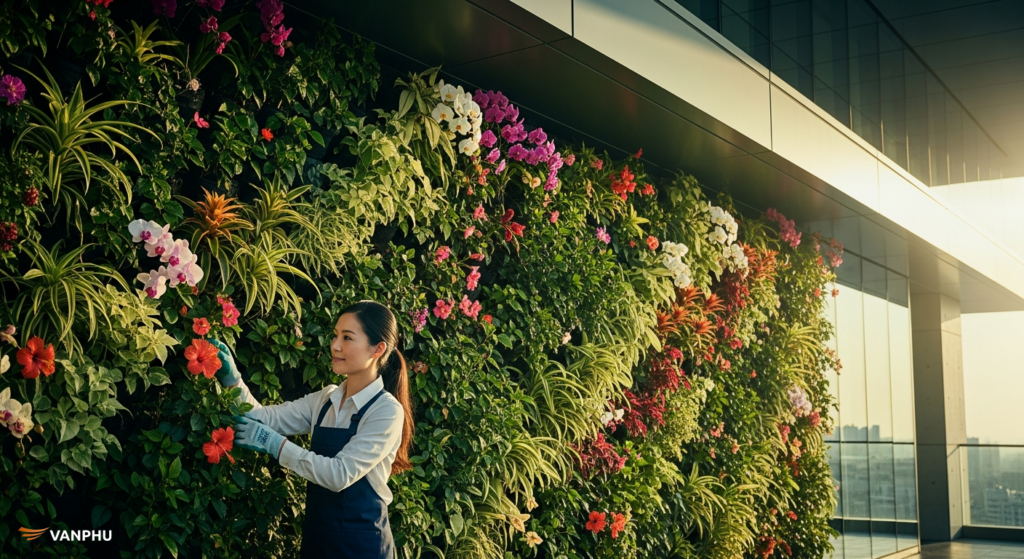
The “Sustainable Green” element is clearly expressed through the selection of environmentally friendly building materials, optimizing the use of natural energy (light, wind), and integrating green spaces. The projects are planned in harmony with the natural landscape, preserving the inherent beauty of the area.
Respecting the natural terrain not only helps preserve the ecosystem but also creates unique living spaces with their own “style”. This brings a feeling of closeness and peace to residents, helping them reconnect with nature.
Building a Close-Knit Community
Community cohesion is expressed through the design of common living spaces. Spacious squares, playgrounds for children, outdoor sports areas, and community living rooms are places where people can meet, interact, and build relationships.
Projects pursuing human-centered architecture often focus on creating a safe, friendly living environment where neighbors can support each other. This helps form a civilized, united community.
Honoring Cultural Values
Integrating local cultural elements into architecture is an important highlight. This can be the use of traditional decorative patterns, local materials, or inspiration from historical architectural works of the region. It helps create a unique identity, bringing a sense of belonging and pride to residents.
Preserving and promoting cultural values not only enriches the spiritual life of residents but also contributes to preserving heritage for future generations. This is an indispensable part of a responsible real estate project.
Benefits for Homebuyers and Investors
For those interested in real estate, especially those who understand lifestyle, human-centered architecture brings many practical benefits. It not only improves the quality of life but also has the potential for sustainable profits.
Improving Quality of Life
Living spaces according to the human-centered philosophy bring a balance between work and life. Residents live in a fresh, safe environment, with plenty of green space to relax and regenerate energy. Community cohesion helps them feel more secure and happier.
In addition, access to public amenities such as parks, libraries, and community centers makes life more convenient and richer. This is especially important for families with young children or the elderly.
Sustainable Investment Potential
Real estate projects that pursue human-centered architecture often have sustainable value over time. Because, they meet the increasing demand of the market for a quality and meaningful life. The difference in design philosophy and commitment to the environment and community creates a great competitive advantage.
Therefore, investing in these projects not only brings financial profits but also invests in the quality of life and community values. This is an inevitable trend in the modern real estate industry.

If you are looking for real estate investment opportunities, learning about projects that apply this philosophy is extremely important. Learn more about attractive real estate and the factors that create sustainable value will help you make a smart decision.
Frequently Asked Questions
How is human-centered architecture different from sustainable architecture?
Sustainable architecture focuses on minimizing negative impacts on the environment. Meanwhile, human-centered architecture broadens the scope, putting people at the center and considering social, cultural, and mental health factors alongside environmental factors.
How to recognize a real estate project according to human-centered architecture?
You can recognize it by the project focusing on green space, community amenities, designs that respect nature and local culture, as well as activities that connect residents.
Is human-centered architecture suitable for every customer?
Yes, this philosophy aims to improve the quality of life for everyone, from individuals, young families to the elderly. Diversity in design and amenities helps meet the needs of many target groups.
Is investing in human-centered real estate risky?
Every investment has risks. However, with increasing awareness of quality of life and the environment, human-centered projects have the potential to grow in sustainable value, reducing long-term risks compared to conventional projects.
In summary, human-centered architecture is not just a design trend but also a living philosophy, bringing real value to people and the community. It shapes a future where homes are not just shelters but also spaces that nurture the soul and connect love.