What are molecular gastronomy labs and why are they revolutionizing experimental cooking?
25/03/2026
• 6 minutes of reading
Share:
f
🔗
Molecular gastronomy represents a fascinating intersection of culinary art and scientific inquiry. It applies principles from chemistry and physics to understand and transform food [1]. This scientific approach has profoundly impacted how we perceive and prepare dishes. For experimental cooks, it opens up a world of innovative possibilities. It allows for the creation of unexpected textures, flavors, and presentations [3].
How did the scientific approach to cooking begin?
The term "molecular and physical gastronomy" was coined in 1988. Hungarian physicist Nicholas Kurti and French physical chemist Hervé This introduced it [1]. Their goal was to establish a formal discipline within food science. This new field would specifically study the chemical and physical processes of cooking in homes and restaurants [1]. Before this, food science primarily focused on industrial production and nutritional properties [2].
Kurti and This organized workshops in Erice, Italy, starting in 1992 [1]. These gatherings brought together scientists and professional chefs. They discussed the science behind traditional cooking methods. Eventually, the name was shortened to "molecular gastronomy" [1]. This shift marked a significant turning point in culinary exploration.
What scientific principles guide molecular gastronomy?
At its heart, molecular gastronomy investigates the physical and chemical transformations that occur during cooking [2]. It examines the molecular structure, properties like mass and viscosity, and chemical reactions of ingredients [1]. This deep understanding helps chefs manipulate food with precision. For instance, studying how different cooking temperatures affect eggs reveals how they coagulate [1].
Molecular gastronomists also explore why mayonnaise becomes firm or why a soufflé swells [2]. This scientific curiosity aims to generate new knowledge. It also seeks to develop novel cooking methods rooted in scientific principles [2]. This blend of science and art creates truly unique culinary experiences [3]. It challenges traditional culinary boundaries.
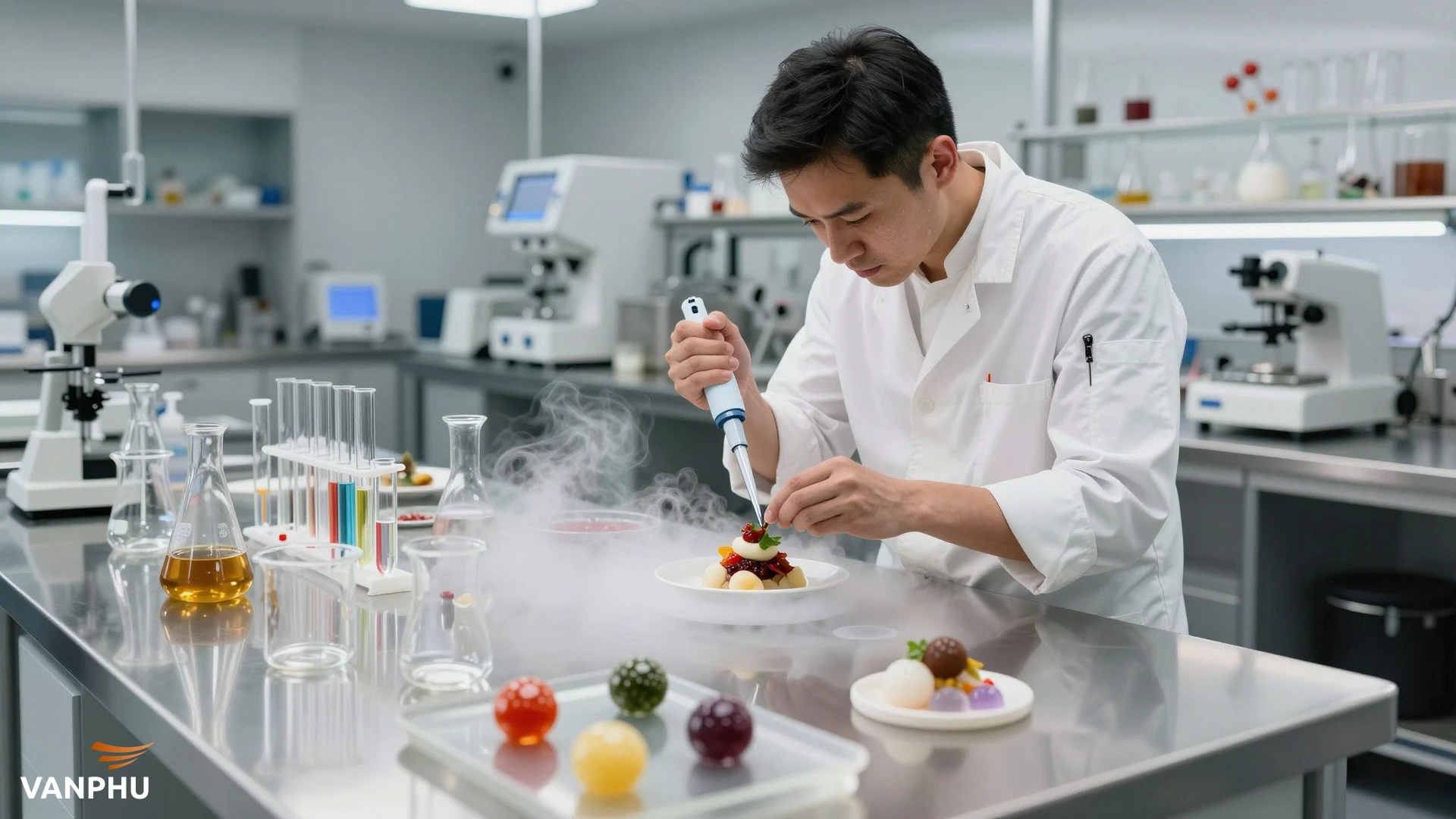
A chef meticulously creates liquid spheres, a hallmark technique of molecular gastronomy. — Image created by AI
Which innovative techniques define molecular gastronomy labs?
Molecular gastronomy introduces a range of techniques borrowed from scientific laboratories. These methods allow chefs to deconstruct and reconstruct food in surprising ways [4]. Spherification is a prime example, transforming liquids into caviar-like pearls [5]. This involves dropping a liquid into a calcium chloride bath, forming a delicate membrane around it.
Emulsification is another key technique. It creates stable mixtures from otherwise immiscible liquids [5]. Chefs use this to create light foams or rich sauces with unexpected textures. Low-temperature cooking, such as sous-vide, ensures precise control over the cooking process [5]. This results in consistently perfect textures and flavors [3]. Flash freezing with liquid nitrogen allows for instant cooling. It creates unique textures and dramatic visual effects [5]. Smoke infusion and gelation further expand the culinary palette [3].
What specialized equipment is found in a molecular gastronomy lab?
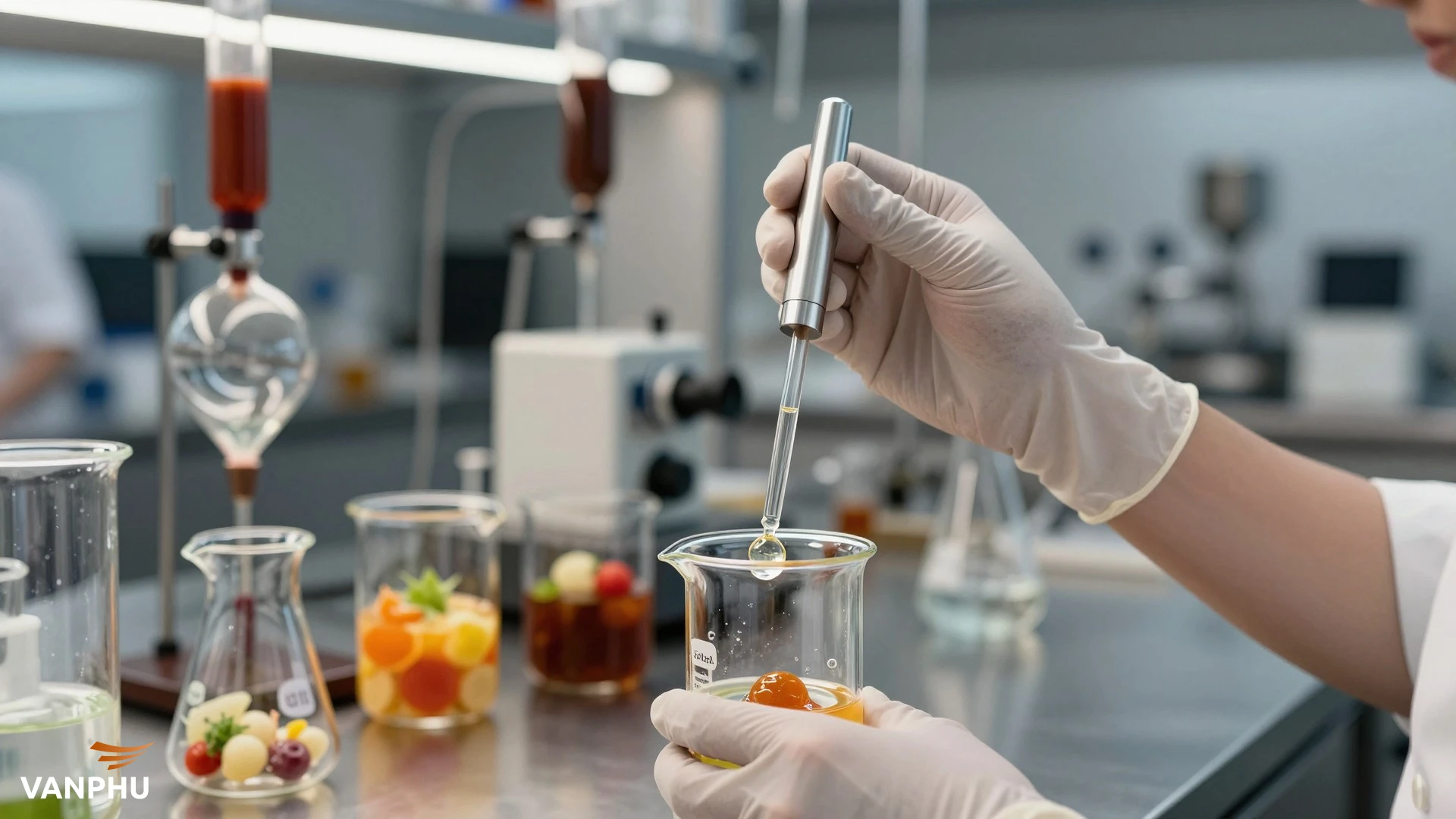
The tools used in molecular gastronomy often resemble those found in a chemistry lab rather than a traditional kitchen [5]. Liquid nitrogen is essential for flash freezing and creating ethereal mists [5]. Rotary evaporators are used to create distillates and extracts with intense, pure flavors [1]. An anti-grill provides a cooled surface for instant freezing, creating intriguing contrasts in temperature.
Centrifuges separate liquids by density, allowing chefs to isolate flavor layers [5]. pH meters monitor acidity, crucial for precise flavor balancing. Other advanced equipment includes vacuum machines, dehydrators, and ultrasonic mixers [5]. These devices enable chefs to achieve unprecedented control over ingredients. The application of such cutting-edge technology, often facilitated by platforms like EON Tech, empowers culinary innovation.
How do ingredients transform in molecular cuisine?
Specialized ingredients are fundamental to molecular gastronomy. These substances help stabilize textures, enhance flavors, and create new physical forms [5]. Hydrocolloids, such as pectin, gelatin, and various gums, act as stabilizers and gelling agents [5]. They can turn liquids into gels or thicken sauces without altering taste.
Emulsifiers like soy lecithin and xanthan gum are used to combine immiscible liquids, creating stable emulsions [5]. Methyl cellulose is a unique gelling agent that solidifies when heated, offering surprising textural changes. Enzymes, such as transglutaminase, are often referred to as "meat glue" because they can bind proteins together [5]. Carbon dioxide is used to create light, airy foams and bubbles, adding another dimension to dishes [5].
What are the benefits and future trends of molecular gastronomy?
Molecular gastronomy allows chefs to push the boundaries of traditional cooking [3]. It creates visually stunning and innovative dishes that surprise diners [3]. Techniques like sous-vide ensure precise cooking, leading to consistently perfect flavors and textures [3]. This fusion of science and art engages multiple senses, offering a unique dining experience [3].
Recent trends highlight eco-conscious practices. This includes incorporating plant-based ingredients and microbes into novel food creations [3]. Advancements like 3D food printing allow for customization of products. They also enable complex geometric structures and personalized nutritional foods [3]. These innovations suggest a future where food is not only delicious but also highly tailored and sustainable.
Can home cooks experiment with molecular gastronomy?
Absolutely! While some techniques require specialized equipment, many principles can be adapted for the home kitchen. Understanding the science behind cooking empowers home cooks to become more experimental. You can explore basic spherification kits or experiment with different gelling agents. Even simple techniques like precise temperature control for eggs are rooted in molecular gastronomy principles [4].
Learning about the chemical reactions of ingredients can elevate everyday cooking. It transforms simple dishes into culinary masterpieces. For instance, understanding how to properly emulsify a vinaigrette is a basic application of these scientific ideas. This approach encourages creativity and a deeper appreciation for the food we prepare. Many culinary schools now integrate these scientific concepts. This helps aspiring chefs master modern techniques.
What does the future hold for culinary science?
The field of molecular gastronomy continues to evolve rapidly. It challenges conventional notions of food and dining. As research progresses, we can expect even more surprising innovations. The focus on sustainability and personalized nutrition will likely grow. Chefs will continue to collaborate with scientists, pushing the boundaries of what's possible in the kitchen. This exciting journey promises a future where every meal is an adventure. It combines tradition with cutting-edge scientific discovery. The ongoing research in universities worldwide ensures continuous advancements. Furthermore, exploring how to master precision sous vide cooking at home can be a great starting point for aspiring molecular gastronomists.
More Information
Molecular Gastronomy: A scientific discipline that investigates the physical and chemical transformations of ingredients during cooking. It studies the composition, properties, and transformations of food at a molecular level to enhance culinary practices.
Spherification: A molecular gastronomy technique that involves encapsulating a liquid in a spherical membrane, typically resembling caviar. This is achieved by reacting a liquid containing sodium alginate with a calcium chloride solution.
Emulsification: The process of creating a stable mixture of two immiscible liquids, such as oil and water. In molecular gastronomy, emulsifiers like soy lecithin are used to create stable foams and sauces with unique textures.
Hydrocolloids: A group of substances, including gums, pectins, and gelatins, that form gels or thicken liquids when dispersed in water. They are essential in molecular gastronomy for creating various textures and stabilizing preparations.
Sous-Vide: A cooking method where food is sealed in a vacuum-safe bag and cooked in a precisely controlled water bath at a consistent low temperature. This technique ensures even cooking and prevents overcooking, leading to perfectly tender results.