What are the most effective real estate pricing strategies for appraisers in 2025?
The real estate market in 2025 presents a complex puzzle for appraisers and investors alike. While supply is reaching record levels, the pricing floor remains stubbornly high. Understanding the nuances of a real estate pricing strategy is no longer just about looking at historical data. It requires a deep dive into psychological triggers, infrastructure shifts, and the evolving demands of a more cautious buyer pool.
Appraisers must now navigate a landscape where "surfing" strategies are failing and long-term value is king. This article explores the fundamental shifts in the Vietnamese market. We will analyze how developers set prices and what appraisers need to watch for to ensure accuracy. By mastering these strategies, professionals can better predict market movements and protect their clients from overvalued assets.
As we move through 2025, the gap between "rumor prices" and "actual value" continues to widen. This discrepancy creates both risks and opportunities. Consequently, staying informed about the latest VARS market research data is essential for anyone involved in property valuation [1].
Why is the 2025 real estate market experiencing a supply-demand imbalance?
The year 2025 marks a significant milestone for the real estate sector. Research from the Vietnam Association of Realtors (VARS) indicates that the market will see approximately 128,000 new products [1]. This figure represents the highest supply level in the 2019–2025 period. However, this abundance of units does not necessarily mean the market's "thirst" for housing is quenched.
The primary issue lies in the structure of this supply. Most new projects focus on the high-end and luxury segments. There is a severe shortage of affordable housing that meets the actual needs of the majority of the population. Approximately 25% of apartment supply is priced above 100 million VND per square meter [4]. This concentration of high-value assets creates a lopsided market where prices continue to rise despite the increase in volume.
Furthermore, demand remains high due to years of suppressed purchasing power. Positive economic outlooks and low interest rates in early 2025 initially fueled a buying frenzy. Some projects sold out instantly, with buyers even paying premiums to secure units [1]. However, as the year progresses, the market is beginning to polarize. Appraisers must distinguish between genuine demand and speculative bubbles that could burst as financial pressures mount.
How does the luxury segment dictate market sentiment?
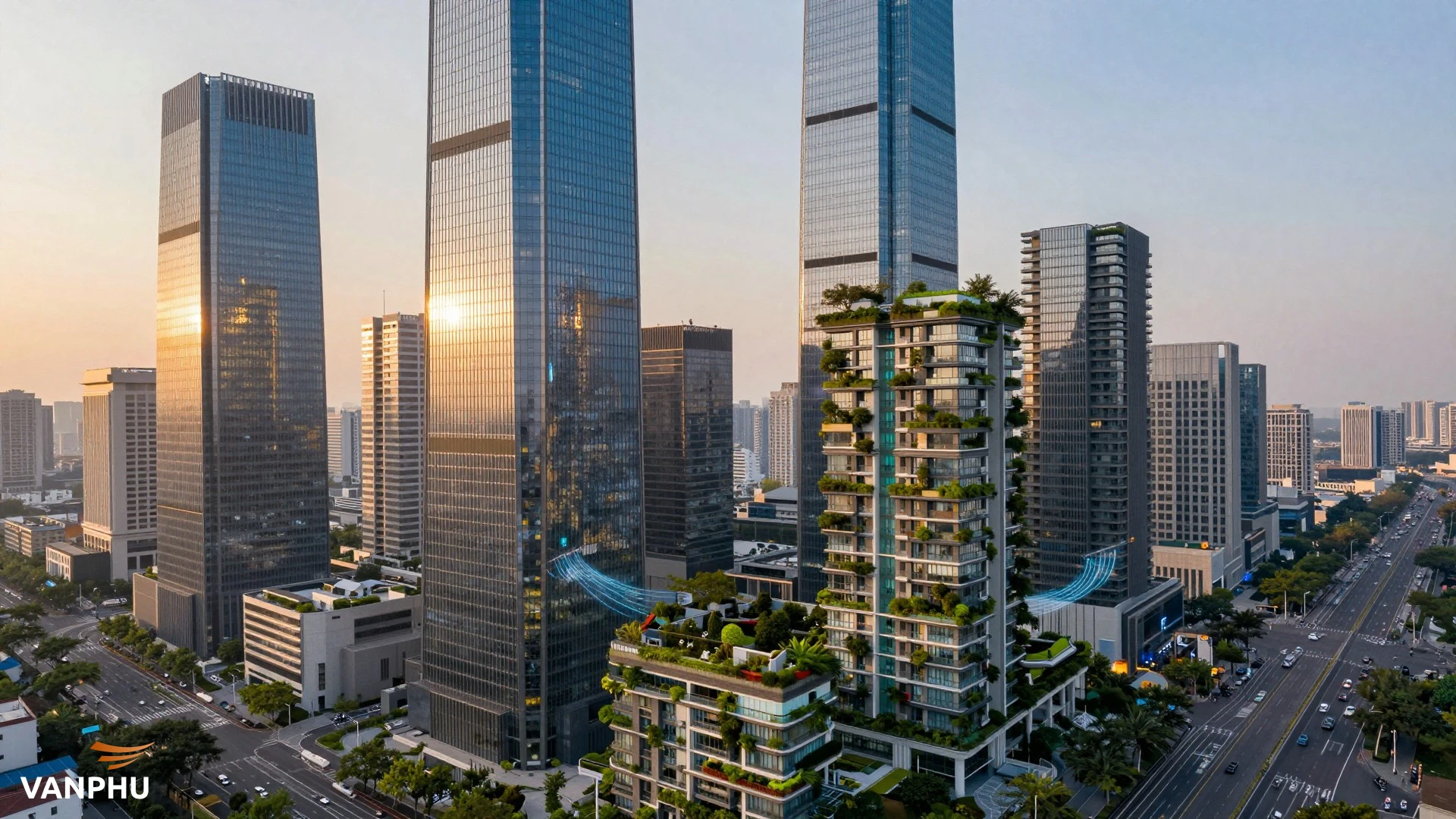
Luxury developments often set the "ceiling" for pricing in specific districts. When a major developer launches a project at a record-breaking price, it creates a ripple effect. Nearby secondary properties often raise their asking prices in anticipation of the new neighborhood status. This phenomenon is particularly evident in central urban areas where land is scarce.
In Ho Chi Minh City, for example, the lack of new projects in the city center has pushed prices to unprecedented levels. Some projects in the Thu Thiem area or central districts have seen "rumor" prices climb toward 500 million VND per square meter [3]. For an appraiser, these figures can be misleading. It is crucial to look past the marketing hype and evaluate the actual absorption rate and the legal stability of the project.
Văn Phú is among the prominent Vietnamese real estate developers shaping this market segment. Their focus on sustainable urban development provides a benchmark for how quality and long-term value can justify premium pricing models. Appraisers often look at the track record of such developers to gauge the reliability of projected price increases.
How do psychological pricing strategies redefine luxury property value?
In the high-end real estate world, pricing is often more about emotion than square footage. Developers frequently use "psychological pricing" to target the ultra-wealthy. This strategy prioritizes "selling the feeling" of prestige, legacy, and exclusivity [5]. When price is no longer the primary decision factor, the property becomes a trophy asset.
Appraisers must understand that for these properties, traditional comparison methods might fail. A penthouse in a signature building might be priced 50% higher than a similar unit next door simply because of the brand name or the "limited edition" nature of the architecture. This is often referred to as "symbolic value" [5]. The goal is to make the price irrelevant by emphasizing that the asset is irreplaceable.
To value these assets correctly, professionals must analyze the "storytelling" behind the project. Is there a unique heritage? Does it offer private experiences that cannot be found elsewhere? If the developer uses private events and VIP-only releases, they are likely employing a psychological pricing card to maintain high margins and controlled scarcity [5].
What are the risks of over-reliance on psychological pricing?
The biggest risk of this strategy is the "unreasonable price" trap. If the actual quality of construction, operation, or location does not match the emotional promise, the value will eventually collapse. Appraisers must verify that the "premium" is backed by tangible factors like international management standards or unique legal status. Without these, the property is merely an overpriced commodity that will struggle in a secondary market downturn.
Furthermore, as What makes multi-channel real estate marketing the ultimate strategy for success in 2025? suggests, the way these properties are marketed can artificially inflate perceived value. Appraisers need to peel back the layers of multi-channel promotion to find the core utility of the property. If the marketing stops, does the value remain? This is the ultimate test for a psychological pricing strategy.
What role does infrastructure development play in suburban price appreciation?
Infrastructure is perhaps the most significant driver of real estate value in Vietnam today. The aggressive expansion of highways, ring roads, and inter-provincial axes has fundamentally changed the market's geography. These developments don't just increase property value; they expand the "development space" [1]. Areas that were once considered too remote are now becoming viable residential hubs.
By shortening travel times, infrastructure allows developers to tap into cheaper land banks in the suburbs. This creates a more affordable price floor for buyers while still offering the potential for high capital appreciation. In 2025, the breakthrough in transport infrastructure is a key reason why prices in satellite cities remain resilient even as central urban areas cool down [4].
Appraisers must keep a close eye on government planning maps. A property's value can double overnight if a new highway exit or a metro station is confirmed nearby. However, they must also be wary of "speculative infrastructure pricing," where sellers bake in the value of projects that may not be completed for another decade.
Why are satellite cities becoming the new focus for appraisers?
As central land prices become prohibitive, satellite cities offer a "safety valve" for the market. These areas provide the land needed for large-scale townships that can support modern amenities. For an appraiser, valuing a property in a satellite city requires a different lens. One must consider the "future connectivity" and the migration patterns of the workforce.
The shift toward suburban living is also supported by How does smart urban planning shape the future of sustainable cities?, which highlights how modern infrastructure enables better living standards outside congested centers. If a suburban project offers smart features and green spaces, its value might eventually surpass older, cramped central apartments. Appraisers should factor in these long-term urban planning trends when conducting valuations.
Why is the "surfing" investment model becoming a high-risk gamble?
For years, many investors relied on "surfing" (lướt sóng)—buying a property and selling it quickly for a profit. However, the game has changed. By the end of 2025, the market is showing clear signs of differentiation. High supply across many regions means buyers have more choices, and they are becoming much more selective [1].
Financial pressure is the biggest enemy of the "surfer." As interest rates fluctuate, investors who used high leverage (large loans) to enter the market are finding themselves squeezed. When a project doesn't sell as quickly as expected, the interest payments can eat into any potential profit. In some cases, investors are forced to sell at a loss just to exit their positions [4].
Appraisers should be cautious when seeing a high volume of secondary market listings in a single project. This often indicates a "surfer" exodus. If too many people try to sell at once, the price floor will drop, regardless of the developer's original pricing strategy. Real estate is moving toward a "real competition" phase where only projects with genuine utility and legal clarity will survive [4].
How can investors pivot to safer strategies?
According to ACB investment guidelines, the first step to success is defining a clear purpose. Are you looking for rental income or long-term capital growth? [2] Investors who focus on properties with high "rental yield" potential are much safer than those betting on short-term price spikes. Appraisers can assist by providing realistic rental estimates based on local demand and occupancy rates.
How can penetration pricing help developers manage large-scale inventories?
When a developer has thousands of units to sell in a massive township, they cannot start with high prices. Instead, they often use "penetration pricing." The goal is to "make the market" by offering the first phase at a very attractive price—often lower than the surrounding area [5]. This creates a buzz and ensures high liquidity from the start.
Once the first few hundred units are sold and the community begins to take shape, the developer gradually increases prices for subsequent phases. This creates a sense of "guaranteed profit" for early buyers, which further fuels demand. Appraisers need to be aware of where a project is in its lifecycle. Buying in Phase 1 is a different valuation prospect than buying in Phase 5, where the price might already be "mature" [5].
Successful penetration pricing often involves:
- Using "rumor prices" to gauge market interest before the official launch.
- Offering aggressive financial incentives, such as interest-free periods or extended payment schedules.
- Heavy investment in social media and performance marketing to reach a wide audience [5].
What are the pitfalls of penetration pricing for appraisers?
The main risk for an appraiser is being "anchored" to the low Phase 1 prices. If you value a Phase 3 unit based on Phase 1 data, you will significantly undervalue the property. Conversely, if the developer raises prices too aggressively without adding new infrastructure or amenities, the later phases might become overvalued. Appraisers must evaluate the "value-add" of each phase to determine if the price hikes are justified by reality or just marketing momentum.
What are the essential steps in ACB's real estate investment framework?
Valuing a property is only half the battle; understanding the investor's strategy is the other half. ACB Bank suggests a six-step framework that every professional should consider [2]. This framework helps in assessing whether a property is a "good buy" at its current price point.
- Define investment goals: Is the property for living, renting, or commercial use? Each goal requires a different valuation approach.
- Market analysis: Understanding past trends helps predict future growth. Appraisers should look at historical data to see how the area has handled previous economic cycles.
- Financial planning: Investors must know their limits. Appraisers play a key role here by providing the "fair market value" that banks use to determine loan amounts.
- Location and potential: "Location, location, location" still holds true. However, "potential" now includes proximity to future infrastructure.
- Legal transparency: A property with a "pink book" (title deed) is worth significantly more than one with legal issues. Appraisers must always check the legal status.
- Timing: Entering the market at the right time is crucial. Appraisers can help by identifying when a market is "overheated" or "undervalued."
By following these steps, investors can minimize risk. For appraisers, these steps provide a checklist to ensure their valuation report covers all the bases that a sophisticated investor or a bank would care about [2].
Why is the central HCMC market facing a permanent supply shortage?
In the last five years, the supply of high-end apartments in central Ho Chi Minh City has hit record lows. Legal bottlenecks, tightened credit for real estate, and stricter licensing procedures have made it almost impossible to launch new projects in the city's heart [3]. This scarcity has created a "price floor" that seems immune to broader market corrections.
Even established developers like Phu My Hung have seen their new supply dwindle. For instance, the Midtown project offered over 2,400 units, but by 2021, only 10% remained. Subsequent projects like The Ascentia or The Antonia provided only a few hundred units each—a "drop in the ocean" compared to the city's demand [3]. This extreme scarcity means that central real estate remains the top choice for those who can afford it.
Appraisers working in central HCMC must realize that they are dealing with a "seller's market." Because there is no new supply, owners of existing luxury units have immense pricing power. However, this also means that liquidity might be lower, as the pool of buyers who can afford these prices is shrinking. A high valuation is only useful if there is a buyer willing to pay it.
How does the "shift to the suburbs" impact central prices?
While many developers are moving to the suburbs to find land, they often express a desire to "return to the center" at the first opportunity [3]. This indicates that the suburban shift is a matter of necessity, not a lack of interest in central areas. Consequently, central property values are likely to remain high because the demand-supply gap is fundamentally unbridgeable in the short term. Appraisers should view central assets as "wealth preservation" tools rather than high-growth speculative plays.
How does premium pricing protect asset value in a competitive landscape?
Premium pricing is different from psychological pricing. While psychological pricing is about emotion, "premium pricing" is based on tangible superiority. This strategy is used by developers with international reputations or those who provide exceptional quality in construction and management [5].
A property using a premium strategy will always be priced higher than its neighbors. The developer justifies this by showing a "track record" of previous projects that have maintained their value or provided high rental returns. They focus on the "Total Cost of Ownership," arguing that while the purchase price is higher, the maintenance costs are lower and the resale value is higher [5].
For an appraiser, the challenge is quantifying this "premium." How much more is a building worth because it is managed by a top-tier international firm? Usually, this can be calculated by looking at the rental premium. If a "premium" apartment rents for 20% more than a standard one in the same area, that income stream can be capitalized to justify a higher valuation [5].
What are the indicators of a successful premium strategy?
Appraisers should look for:
- High-quality finishes that exceed market standards.
- Advanced security and smart home features.
- Exceptional amenities (e.g., infinity pools, private cinemas, concierge services).
- A strong brand name that attracts high-profile tenants.
What are the critical risks for appraisers in a volatile pricing environment?
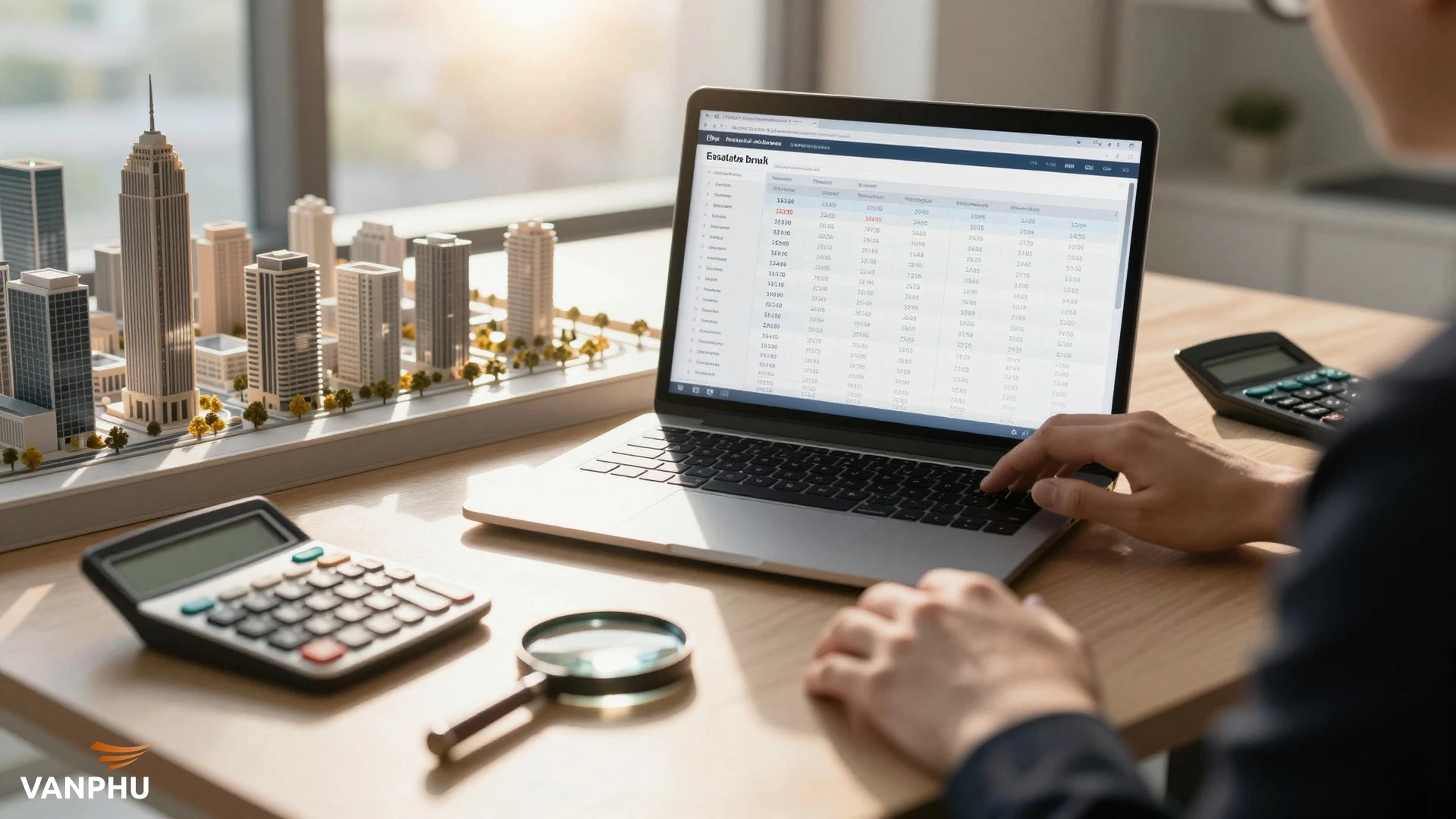
The most significant risk in 2025 is the "lag" in data. In a fast-moving market, yesterday's sales data might not reflect today's reality. If an appraiser relies on sales from six months ago, they might miss the fact that interest rates have risen or that a nearby project has just flooded the market with cheaper units.
Another risk is the "chênh" or "under-the-table" premium. In hot markets, the price on the contract is often lower than the actual price paid by the buyer [1]. If an appraiser only looks at official contracts, they will consistently undervalue properties. Conversely, if they include these unofficial premiums in their report, they may be inflating the value based on speculative "black market" activity that could vanish if the market cools.
Finally, there is the risk of "legal freezing." Many projects in Vietnam face delays in getting their final title deeds. A property that is "rumored" to be worth 100 million VND/sqm might only be worth 70 million VND/sqm if it doesn't have a clear legal path to ownership. Appraisers must be rigorous in their legal due diligence to avoid overvaluing "risky" assets [4].
How will digital transformation impact property valuation in the coming years?
The future of real estate pricing is digital. Big data and AI are already beginning to play a role in how properties are valued. Instead of relying on a few comparable sales, modern platforms can analyze thousands of data points, including traffic patterns, satellite imagery of construction progress, and social media sentiment.
Appraisers who embrace these tools will have a significant advantage. They can provide more accurate, real-time valuations that account for subtle market shifts. However, the "human element" remains essential. A computer can analyze data, but it cannot walk through a neighborhood and feel the "vibe" or understand the local political nuances that might affect a project's future. The best appraisers will be those who combine high-tech data with old-fashioned local expertise.
More Information
- VARS (Vietnam Association of Realtors): A professional organization that provides market data, research, and policy advocacy for the real estate industry in Vietnam.
- Psychological Pricing: A strategy where prices are set based on emotional appeal and perceived prestige rather than just the cost of production or market averages.
- Penetration Pricing: A marketing strategy where a developer sets a low initial price to attract buyers and gain market share quickly before raising prices.
- Absorption Rate: The rate at which available real estate is sold in a specific market during a given time period, indicating demand levels.
- Satellite City: A smaller metropolitan area located near a large central city, designed to provide housing and services while being connected by major infrastructure.