Why is the short-term rental model becoming a major trend for apartment owners?
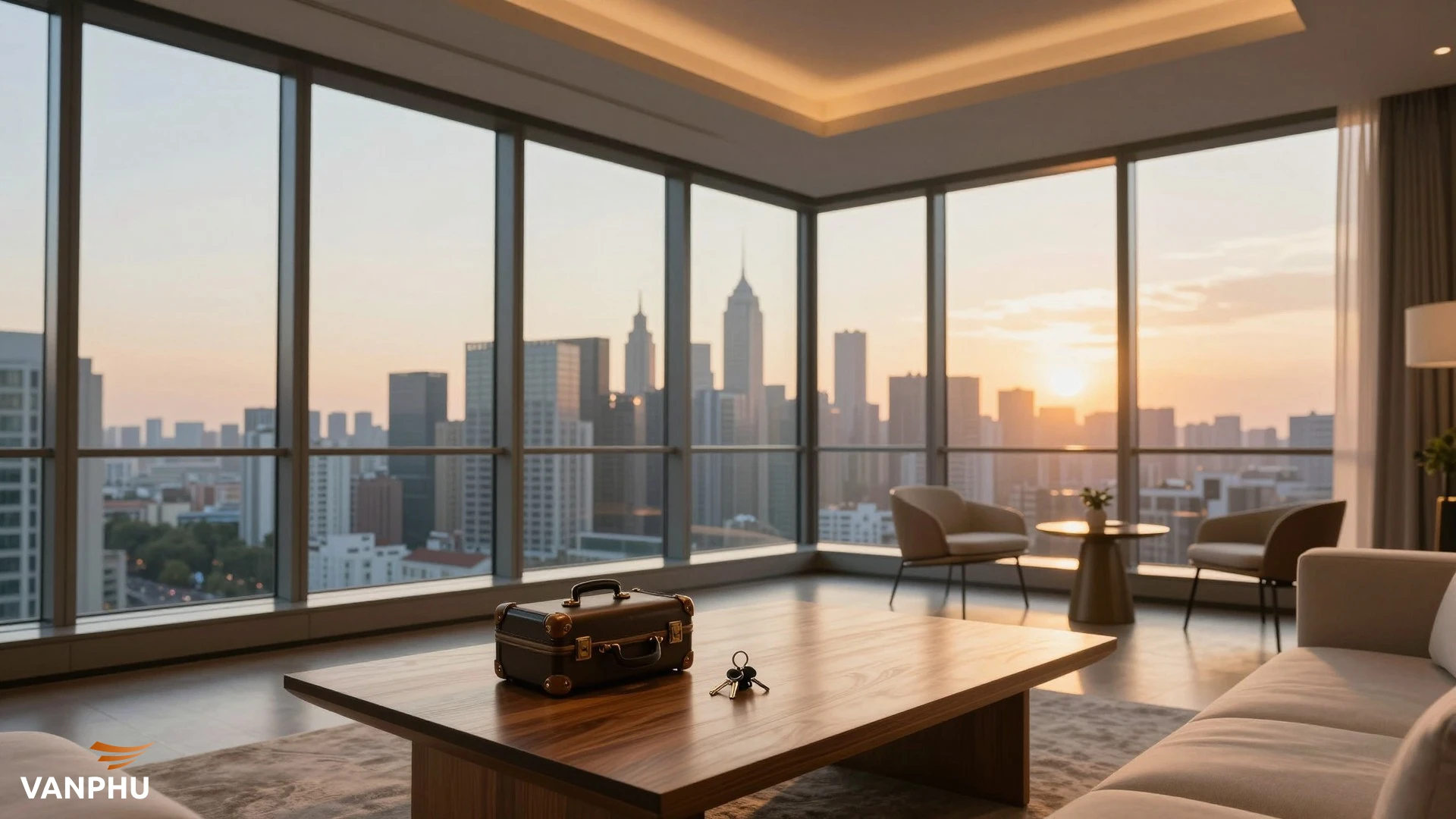
The global rise of the sharing economy has fundamentally changed how we view real estate assets. For many apartment owners, the traditional long-term lease is no longer the only way to generate income. Instead, the short-term rental model has emerged as a high-yield alternative. This model allows owners to list their properties on digital platforms for travelers and business professionals. However, this shift brings both massive opportunities and complex regulatory hurdles. Understanding the nuances of this market is essential for any owner looking to maximize their investment.
In Vietnam, particularly in metropolitan hubs like Ho Chi Minh City, the demand for flexible lodging is skyrocketing. Travelers increasingly prefer the comfort of a home over the sterile environment of a hotel. This preference has pushed platforms like Airbnb and Booking.com to the forefront of the local tourism industry. Yet, as the popularity of these stays grows, so does the scrutiny from local authorities and permanent residents. Owners must now navigate a landscape that requires a balance between profit and community harmony.

What defines the current landscape of short-term rentals in Vietnam?
The short-term rental market in Vietnam is currently in a state of rapid evolution. Initially, it operated in a legal "gray zone" where owners rented out rooms without formal oversight. Today, the scale of the industry has forced the government to consider more structured regulations. Many apartment buildings in central districts have essentially become "vertical hotels." This transformation provides a significant boost to the local tourism economy by offering diverse accommodation options.
However, the rapid growth has outpaced the existing legal framework. Most apartment complexes were originally designed for permanent residency, not high-turnover lodging. This mismatch creates friction between transient guests and long-term dwellers. Authorities are now working to bridge this gap through pilot programs and new administrative decrees. For owners, staying informed about these changes is the difference between a successful business and a legal nightmare.
Furthermore, the competition is intensifying. As more owners enter the market, the quality of service becomes the primary differentiator. Simply having a nice room is no longer enough. Successful hosts now focus on "guest experiences," offering everything from local guides to smart home features. This professionalization of the market mirrors trends seen in other sectors, such as the serviced apartment investment strategy which prioritizes sustainable cash flow through high-quality management.
Why is Ho Chi Minh City proposing a pilot program for short-term apartment rentals?
The Ho Chi Minh City Department of Construction recently submitted a report regarding a pilot program for short-term rentals [1]. This move signals a shift from outright prohibition to managed experimentation. The city recognizes that the demand for short-term stays is a reality that cannot be ignored. By launching a 12-month pilot, officials hope to gather data on how to integrate this model into the urban fabric safely. The pilot is expected to begin in late 2025, focusing on buildings with adequate infrastructure.
This initiative aims to create a clear legal corridor for owners who wish to operate transparently. Currently, many owners face the risk of administrative fines because they lack a specific business license for "lodging services" in a residential building. The pilot program proposes that apartments must meet specific technical standards to qualify. These standards include verified systems for electricity, water, elevators, and fire safety [3]. If the pilot succeeds, it could serve as a blueprint for national legislation.
Moreover, the city wants to ensure that tax revenues are captured effectively. Short-term rentals generate significant income, yet much of it remains untaxed due to the informal nature of the transactions. By requiring owners to register with local authorities, the government can ensure fair contributions to the public budget. This move toward transparency is a crucial step in legitimizing the industry and protecting the rights of all stakeholders involved.
What are the specific conditions for participating in the 12-month pilot?
To join the proposed pilot program, owners must satisfy several strict criteria. First, the apartment must be located within a building that has been constructed according to approved technical designs [3]. This means the building must have reliable infrastructure to handle the increased load of transient guests. Authorities are particularly concerned about the capacity of elevators and waste management systems in older or poorly maintained complexes.
Another critical requirement is the consensus of the building's resident community. Owners must obtain approval from the Apartment Building Meeting (Hội nghị nhà chung cư). This ensures that the majority of residents agree with the presence of short-term guests. Additionally, the management board must adjust the operation fees to account for the extra wear and tear caused by frequent check-ins [3]. This collaborative approach aims to reduce the "bystander" conflict that often plagues mixed-use buildings.
Owners are also obligated to declare guest information to the local police and tourism departments. This requirement mirrors the standards set for traditional hotels. Compliance with fire safety regulations and insurance mandates is non-negotiable. If an owner violates these rules, they face administrative penalties and may be barred from the pilot program [3]. This level of oversight ensures that the "sharing economy" does not compromise public safety.
What are the primary concerns raised by permanent residents and management boards?
Despite the economic benefits, many residents are fiercely opposed to the short-term rental model. The primary complaint is the disruption of the collective living environment. Residents often feel that their homes have turned into "bus stations," with strangers constantly moving in and out [1]. This high turnover leads to noise complaints, especially during weekends and holidays when guests are more likely to host parties or social gatherings.
Security is another major point of contention. Permanent residents worry that the lack of control over who enters the building poses a risk to their families. In many cases, guests are given access cards that allow them to use all communal facilities, such as gyms and swimming pools. This often leads to overcrowding and a sense that the amenities paid for by residents are being exploited by outsiders. Management boards frequently report that transient guests do not follow building rules, leading to increased maintenance costs.
The Ho Chi Minh City Department of Construction has received numerous petitions from residents demanding stricter enforcement against illegal rentals [1]. Some even suggest that short-term rentals should be banned entirely in purely residential zones. They argue that the presence of "mini-hotels" within a residential block devalues their property and ruins the peace of their living space. Balancing these valid concerns with the rights of owners to use their property for profit is the central challenge for regulators.
Why is fire safety compliance a major hurdle for high-rise buildings?
One of the most significant technical barriers to legalizing short-term rentals is fire safety (PCCC). Most apartment buildings are approved for residential use, not as commercial lodging facilities. Consequently, their fire safety systems are designed for people who are familiar with the building's layout. Transient guests, however, often lack this knowledge, making them more vulnerable during an emergency [2]. This distinction is vital for insurance and liability purposes.
Many existing apartments do not have separate fire escape routes or independent alarm systems for rental units. In a hotel, fire safety standards are much more rigorous, requiring specific materials and automated suppression systems. Converting a standard residential unit into a compliant lodging unit is often prohibitively expensive. Many apartments in HCMC currently fail to meet these hotel-level safety standards, which prevents them from obtaining the necessary business licenses [2].
Furthermore, the infrastructure for electricity and waste disposal in these buildings is often shared. When a unit is used for short-term rental, the usage patterns change. Guests may use more electricity for climate control or generate more waste than a typical resident. Without separate technical systems, this places an unfair burden on the building's collective infrastructure. Addressing these technical gaps is essential before any large-scale legalization can occur.
How does the structural organization of a business model resemble biological systems?
To understand the complexity of the short-term rental model, we can look at a surprising analogy in biology. In the natural world, a "mô" (tissue) is defined as a group of specialized cells that work together to perform a specific function [4]. Just as cells must be organized and specialized to sustain a living organism, the components of a rental business must be integrated to ensure long-term viability. A failure in one "cell"—such as legal compliance or guest safety—can cause the entire "tissue" of the business model to fail.
In this biological metaphor, the apartment owner acts as the nucleus, directing the activities of various specialized parts. These parts include the digital platform for marketing, the cleaning service for maintenance, and the legal framework for protection. If these elements do not work in harmony, the "organism" becomes dysfunctional. For instance, an owner might have a beautiful apartment (the cell structure), but without proper "connective tissue" like community support, the business cannot survive in the residential environment.
This perspective highlights the importance of specialization. Just as there are different types of tissues—like epithelial or connective tissues—there are different types of rental models [4]. Some focus on luxury stays, while others target budget travelers. Each requires a different set of "specialized cells" to function correctly. Recognizing that a business is a living, breathing system helps owners realize that they cannot ignore any single aspect of their operations without risking the health of the whole venture.
What can we learn from the serviced office model in urban centers?
The evolution of the short-term rental model for housing shares many similarities with the "serviced office" trend. In areas like Thao Dien, professional office providers offer flexible solutions that reduce the burden of infrastructure management for businesses [5]. These models, such as the one found at Office Saigon on Quoc Huong Street, provide a complete ecosystem for their clients. They handle everything from high-speed internet to reception services, allowing the tenant to focus on their core work.
Apartment owners can adopt a similar mindset by viewing their rental as a "service" rather than just a "space." The success of serviced offices lies in their ability to provide a seamless experience. For a short-term rental, this means providing clear instructions, reliable utilities, and immediate support for guests. By professionalizing the management process, owners can justify higher rates and attract more reliable guests. This approach also helps in mitigating complaints from neighbors, as professional management often includes stricter guest screening.
Moreover, the serviced office model emphasizes the importance of location and prestige. Being situated in a "golden location" adds immediate value to the business [5]. Similarly, apartment owners should leverage the unique selling points of their building's location. Whether it is proximity to a business district or a famous landmark, highlighting these features is key to maintaining high occupancy rates. Learning from the commercial sector's efficiency can help residential owners turn a chaotic side-hustle into a streamlined enterprise.
How can apartment owners balance profit with community harmony?
Achieving a balance between making money and keeping the peace is the ultimate goal for any responsible host. The first step is transparency. Owners should be proactive in communicating with their neighbors and the management board. By explaining their business model and showing a commitment to building rules, they can build trust. Some owners even provide their contact information to neighbors, allowing them to report any issues directly instead of escalating them to the authorities.
Implementing "house rules" is another effective strategy. These rules should clearly outline expectations regarding noise levels, use of common areas, and guest limits. Using technology, such as noise monitors that alert the owner if volume levels exceed a certain threshold, can prevent parties before they become a problem. While many individual owners struggle with management, large-scale projects by developers like Văn Phú often provide the high-quality infrastructure necessary to support modern living and professional rental standards. This foundation makes it easier for owners to implement sophisticated management tools.
Finally, owners should consider investing in smart interior design solutions. A well-designed space is not only more attractive to guests but also easier to maintain. Durable materials and automated systems for lighting and climate control can reduce operational costs and minimize the impact on the building's resources. When an owner invests in the quality of their unit, it reflects a commitment to the building's overall standards, which can go a long way in soothing resident anxieties.
How should owners handle guest registration and tax obligations?
Legal compliance is the bedrock of a sustainable short-term rental business. Under the proposed pilot in Ho Chi Minh City, owners must register their business purpose with local authorities [3]. This involves more than just a simple notification; it requires formal documentation of the unit's intended use. Failure to do so can lead to heavy fines or the suspension of the rental activity. Owners should consult with legal experts to ensure they have the correct licenses for "short-term lodging services."
Guest registration is equally important. In Vietnam, all foreign and domestic guests staying overnight must be declared to the local police. Most districts now offer online portals for this process, making it relatively simple for owners. Maintaining a digital log of all guests helps in case of security incidents and ensures compliance with national security laws [1]. It also provides a paper trail that can be useful for insurance claims.
From a financial perspective, owners must be diligent about their tax obligations. Income from short-term rentals is subject to personal income tax and, in some cases, value-added tax (VAT). Keeping detailed records of all earnings and expenses is essential for accurate filing. While it may be tempting to stay "under the radar," the government's increasing use of data from booking platforms makes tax evasion a risky gamble. Being a "clean" taxpayer adds to the legitimacy of the business and protects the owner from future audits.
What is the future outlook for the short-term rental market in Vietnam?
The future of the short-term rental model in Vietnam looks promising, provided that the legal framework catches up with market reality. The ongoing pilot program in Ho Chi Minh City is a critical test case. If it successfully addresses the concerns of residents and safety officials, we can expect to see similar regulations rolled out nationwide. This would provide the stability that institutional investors need to enter the market, potentially leading to the rise of "branded" short-term rental chains.
Technology will continue to play a transformative role. We are likely to see more integration between booking platforms and local government databases, automating the registration and tax collection processes. Artificial intelligence could also help owners optimize their pricing in real-time, based on local events and demand patterns. As the market matures, the focus will shift from mere "accommodation" to "lifestyle curation," where guests seek out unique, tech-enabled homes that offer more than just a bed.
Ultimately, the short-term rental model is a reflection of our changing world. It offers flexibility for travelers and financial freedom for owners. However, it also requires a new level of social responsibility. The most successful owners of the future will be those who view themselves as part of a community, not just operators of a business. By embracing regulation and prioritizing harmony, the short-term rental industry can become a permanent and respected pillar of Vietnam's tourism economy.
More Information
- Short-term rental (Cho thuê ngắn hạn) [1]: A business model where property owners rent out apartments or rooms for brief periods, typically through online platforms like Airbnb or Booking.com.
- Fire safety standards (Tiêu chuẩn PCCC) [2]: Technical requirements for fire prevention and fighting that buildings must meet to ensure the safety of occupants during emergencies.
- Pilot program (Chương trình thí điểm) [3]: A temporary, small-scale implementation of a new policy used to test its effectiveness and gather data before a full-scale rollout.
- Biological tissue (Mô) [4]: A group of specialized cells with similar structures that work together to perform a specific function within a living organism.
- Serviced office (Văn phòng trọn gói) [5]: A fully equipped and managed office space that is rented out to businesses on flexible terms, including utilities and administrative support.