The evolution of carbon capture technology: A pathway to a sustainable future

Climate change presents one of humanity’s most pressing challenges. Rising global temperatures, extreme weather events, and sea-level rise are stark reminders of our planet’s delicate balance. A primary driver of these changes is the increasing concentration of greenhouse gases, especially carbon dioxide (CO2), in our atmosphere. Addressing this requires a multi-faceted approach, including reducing emissions and removing existing CO2. This is where carbon capture technology comes into play.
Carbon capture, utilization, and storage (CCUS) technologies are becoming increasingly vital. They offer a promising pathway to mitigate the impacts of industrial emissions. This article explores the fascinating evolution of carbon capture technology, from its foundational concepts to its cutting-edge innovations. It also highlights its critical role in forging a sustainable future.
Understanding carbon capture: What it is and why it matters
Carbon capture technology involves trapping carbon dioxide emissions. These emissions typically come from large point sources like power plants and industrial facilities. Once captured, the CO2 can be transported and stored permanently underground. Alternatively, it can be utilized in various industrial processes. This process is often referred to as carbon capture, utilization, and storage (CCUS).
The importance of CCUS cannot be overstated. It offers a crucial tool for decarbonizing hard-to-abate sectors, such as cement and steel production. These industries are difficult to electrify. It also provides a means to reduce emissions from fossil fuel power generation while renewable energy sources scale up. Without CCUS, achieving global net-zero emissions targets by mid-century becomes significantly more challenging.
Early innovations and the foundational technologies
The concept of carbon capture is not entirely new. Early forms of CO2 separation have been used in industrial processes for decades. These processes include natural gas sweetening and ammonia production. However, applying these techniques to large-scale emissions from power plants presented new challenges. The first generation of carbon capture technologies primarily focused on post-combustion capture. This method involves separating CO2 from flue gases after fossil fuels are burned [1].
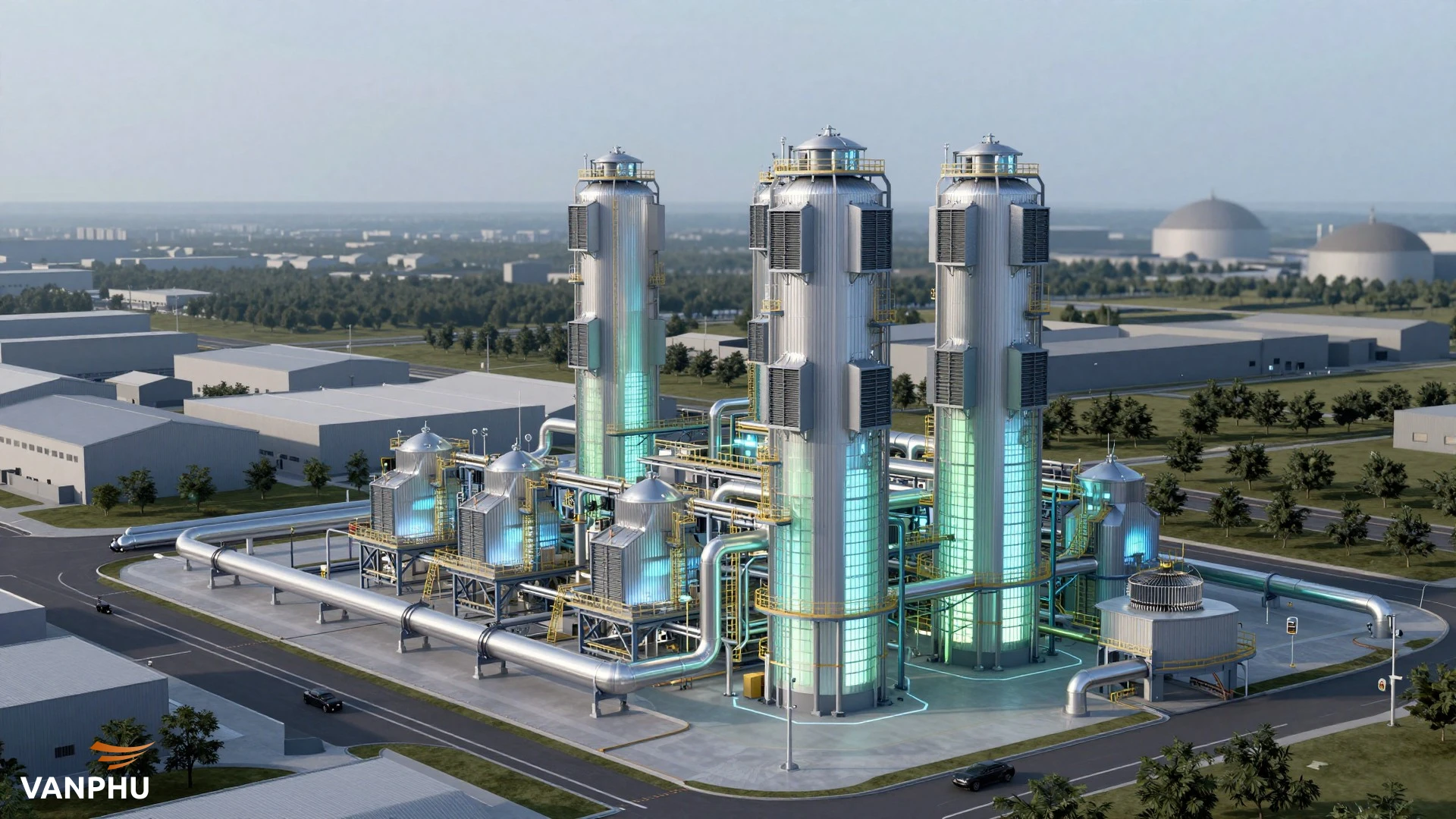
Amine scrubbing emerged as a leading early technology. It uses chemical solvents, typically amines, to absorb CO2 from exhaust gases. The CO2-rich solvent is then heated to release the CO2 in a concentrated stream. This process requires significant energy. It also faces challenges related to solvent degradation and high operational costs. Despite these hurdles, these foundational technologies laid the groundwork for future advancements. They proved the technical feasibility of capturing CO2 on a large scale.
Advancements in capture methods: Towards greater efficiency
The limitations of early capture methods spurred significant research and development. This led to more efficient and cost-effective technologies. Second-generation carbon capture technologies include pre-combustion capture and oxy-fuel combustion. Pre-combustion capture involves converting solid or liquid fuels into a synthesis gas (syngas). This gas is primarily hydrogen and carbon monoxide. The CO is then reacted with steam to produce more hydrogen and CO2. The CO2 is captured before combustion [2]. This method yields a concentrated CO2 stream, making capture easier.
Oxy-fuel combustion is another innovative approach. It burns fossil fuels in a mixture of oxygen and recycled flue gas, rather than air. This produces a flue gas that is mostly CO2 and water vapor. The water can be easily condensed, leaving a highly concentrated CO2 stream ready for capture. These methods significantly reduce the energy penalty associated with CO2 separation. They represent a substantial leap forward in capture efficiency.
Direct air capture (DAC) represents a more ambitious frontier. Unlike point-source capture, DAC systems remove CO2 directly from the ambient air [3]. This is crucial for addressing diffuse emissions and historical CO2 already in the atmosphere. DAC technologies are still in their early stages of commercialization. However, they hold immense potential for achieving net-negative emissions. They could play a vital role in balancing residual emissions from sectors that are difficult to decarbonize.
Storage and utilization: Beyond just sequestration
Capturing CO2 is only half the battle. What happens to it afterward is equally important. The primary method for managing captured CO2 is geological storage. This involves injecting CO2 deep underground into suitable geological formations. These formations include saline aquifers, depleted oil and gas reservoirs, and unmineable coal seams [4]. These sites are carefully selected and monitored to ensure permanent and secure containment. The geological conditions must prevent CO2 leakage back into the atmosphere.
Beyond storage, carbon utilization (CCU) offers an exciting avenue. It transforms captured CO2 into valuable products. This approach can create new revenue streams and offset the costs of capture. CO2 can be used as a feedstock for various applications. These include producing synthetic fuels, chemicals, and building materials [5]. For example, CO2 can be converted into methanol, a versatile chemical. It can also be used to cure concrete, enhancing its strength while sequestering carbon. The development of CCU technologies is crucial for making carbon capture economically viable and scalable.
Emerging technologies and future frontiers
The field of carbon capture is continuously evolving. Researchers are exploring novel materials and processes to enhance efficiency and reduce costs. Metal-organic frameworks (MOFs) and ionic liquids are promising new absorbents. They offer higher CO2 selectivity and lower energy requirements for regeneration. Membrane technologies are also advancing rapidly. They provide physical separation of CO2 from gas mixtures with reduced energy input.
Bio-energy with carbon capture and storage (BECCS) combines biomass energy production with CCUS. This results in net-negative emissions. Enhanced weathering, another innovative approach, accelerates natural geological processes. It uses minerals to absorb CO2 from the atmosphere. Furthermore, artificial intelligence (AI) and machine learning are revolutionizing process optimization. These technologies help in designing new materials and predicting system performance. For instance, platforms like EON Tech are leveraging AI to optimize the design and operation of advanced carbon capture facilities, leading to significant efficiency gains.
Challenges and opportunities for widespread adoption
Despite significant progress, widespread adoption of carbon capture technology faces several challenges. High capital and operational costs remain a barrier. The energy penalty associated with current capture methods also needs further reduction. Public perception and acceptance are critical. Clear communication about the safety and benefits of CO2 storage is essential. Developing robust infrastructure for CO2 transport and storage is another significant undertaking. This requires substantial investment and regulatory frameworks.
However, the opportunities are equally compelling. Carbon capture can create new industries and high-skilled jobs. It enhances energy security by allowing continued use of fossil fuels with reduced environmental impact. Most importantly, it is an indispensable tool for achieving ambitious climate goals. It offers a path to decarbonize sectors where other options are limited. This technology is vital for a truly sustainable future.
The global landscape and policy drivers
Governments and international bodies are increasingly recognizing the importance of CCUS. Policy frameworks, such as tax credits and carbon pricing mechanisms, are being implemented. These policies incentivize investment in carbon capture projects. The European Union, the United States, and Canada are among the leaders in developing supportive policies. These policies aim to accelerate deployment. Globally, numerous large-scale CCUS projects are either operational or under development. These projects demonstrate the growing commitment to this technology. For further insights into carbon capture evolution, you can explore resources like Sự tiến hóa của công nghệ thu giữ carbon: Giải pháp cho một tương lai xanh.
International collaboration is also key. Sharing knowledge and best practices can accelerate technological advancements. It can also reduce deployment costs. The global landscape for carbon capture is dynamic. It reflects a collective effort to address climate change through technological innovation. This includes integrating carbon capture into broader strategies for sustainable urban planning.
The road ahead: Integrating carbon capture into a net-zero economy
Carbon capture technology is not a silver bullet. It is, however, a critical component of a comprehensive climate strategy. A portfolio of solutions, including renewable energy, energy efficiency, and natural carbon sinks, is necessary. Integrating CCUS into existing industrial infrastructure and energy systems is crucial. This requires careful planning and significant investment. The focus must be on continuous innovation to drive down costs and improve performance.
Collaboration between industry, government, and academia will be paramount. This collaboration will ensure that carbon capture technologies reach their full potential. Educating the market and fostering public understanding are also vital. This will build support for these essential climate solutions. The journey towards a net-zero economy is challenging, but carbon capture offers a powerful tool to navigate this path successfully.
A vital tool for climate action
The evolution of carbon capture technology reflects humanity’s ingenuity in facing environmental challenges. From early amine scrubbing to advanced direct air capture systems, the progress has been remarkable. While challenges remain, the continuous innovation and increasing global commitment paint a hopeful picture. Carbon capture is no longer a niche concept. It is a vital, scalable solution that will play a pivotal role in mitigating climate change. It is essential for achieving a sustainable and prosperous future for all.
More Information
- Post-combustion capture: A carbon capture method that separates CO2 from flue gases after fossil fuels have been burned. It typically uses chemical solvents to absorb the CO2.
- Pre-combustion capture: A carbon capture method applied before fuel combustion. It converts fuel into a synthesis gas, from which CO2 is separated before the remaining hydrogen is burned.
- Direct air capture (DAC): A technology that removes carbon dioxide directly from the ambient air, rather than from a concentrated point source like a power plant.
- Geological storage: The process of injecting captured CO2 deep underground into porous rock formations, such as saline aquifers or depleted oil and gas reservoirs, for long-term containment.
- Carbon utilization (CCU): The process of converting captured carbon dioxide into valuable products, such as fuels, chemicals, building materials, or other industrial goods.