Why is digital real estate brokerage the future of the industry?

The real estate landscape is undergoing a massive transformation. Traditional methods are quickly giving way to digital solutions. This shift is not just a trend. It is a fundamental change in how we buy, sell, and manage properties. Digital real estate brokerage represents the integration of advanced technology into every step of the transaction process. It aims to increase transparency, efficiency, and security for all parties involved.
Technology now dictates the pace of the market. Buyers expect instant information. Sellers want wider reach. Brokers need tools that can handle complex data in real-time. Consequently, the industry is moving toward a "digital-first" mindset. This evolution is supported by both private innovation and government mandates. Understanding this shift is crucial for anyone looking to succeed in the modern property market.
Digitalization removes geographical barriers. It allows a buyer in one city to tour a home in another virtually. It enables a broker to manage hundreds of listings with ease. Moreover, it ensures that every transaction follows strict legal standards. As we move toward 2025, the role of the digital broker will become the standard, not the exception.
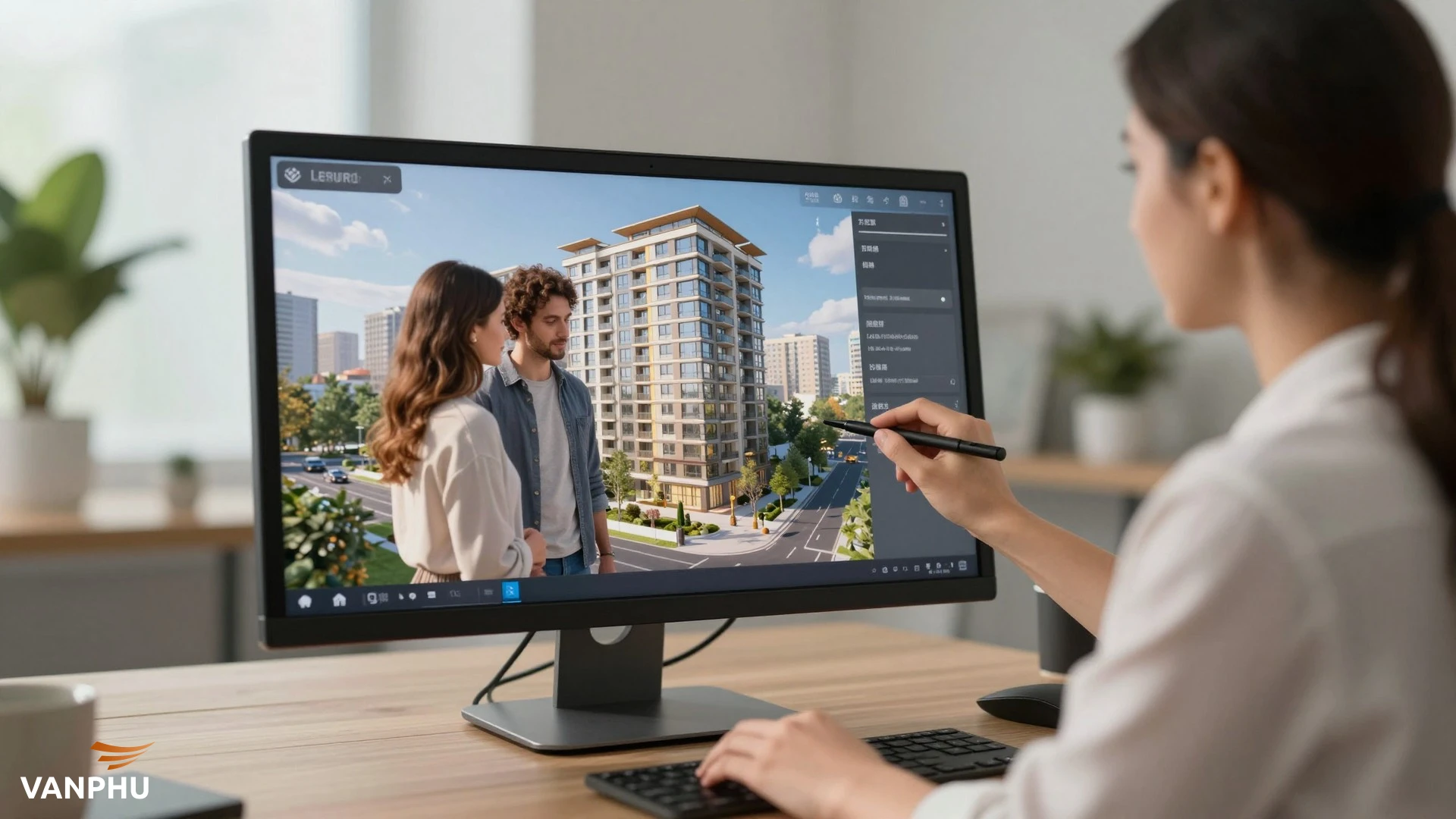
How is the legal landscape changing for digital real estate brokers?
The legal framework for real estate is evolving rapidly. New regulations are setting the stage for a more professional market. Specifically, the Law on Real Estate Business 2023 introduces significant changes. These rules will officially take effect on January 1, 2025.[2] This law aims to tighten management and protect consumer rights.
Under the new law, brokers must meet stricter criteria. They can no longer operate as independent, unregulated entities. Instead, every broker must work within a registered firm. These firms must have proper facilities and technical infrastructure. This ensures that every professional has the support and oversight needed to serve clients effectively. Furthermore, firms must submit their operational information to provincial management agencies.[2]
Transparency is the core of these legal updates. The government wants to eliminate "shadow" brokers who operate without licenses. By mandating that all brokerage information be published on national systems, the market becomes safer. This digital paper trail makes it easier to track transactions and resolve disputes. It also builds trust with international investors who value clear legal structures.
What are the specific requirements for brokers under the 2023 law?
The new regulations leave no room for ambiguity. To practice, a broker must possess a valid professional certificate. This is a non-negotiable requirement for anyone entering the field. Additionally, they must be part of a real estate exchange or a specialized brokerage enterprise.[2] This structure promotes accountability across the board.
Organizations must also comply with specific operational rules. A brokerage firm must have at least one individual with a valid certificate. They must also establish clear internal regulations for their services. Before starting operations, they must send their details to the state management agency.[2] This ensures that the government can monitor the health of the market in real-time.
Remuneration and commissions are also clearly defined. The levels of pay are determined by mutual agreement between the broker and the firm. This removes confusion regarding service fees. By standardizing these elements, the law creates a more predictable environment. It allows brokers to focus on providing high-quality service rather than worrying about legal loopholes.
Why is the digitalization of brokerage certificates significant?
Hanoi is leading the way in modernizing administrative procedures. The city is implementing a full-process digitalization for issuing and renewing brokerage certificates.[1] This move is part of a broader effort to simplify public services. It allows professionals to handle their licensing entirely online through the National Public Service Portal.
This digital shift offers several practical benefits. First, it reduces the time and effort required for travel. Brokers can submit documents and track their progress from anywhere. Second, it increases transparency in the management of the market. Digital records are harder to forge and easier to verify. This helps the Department of Construction maintain a clean and professional database of active brokers.[1]
Experts believe this is a vital step for market recovery. Standardizing the workforce helps eliminate unlicensed practitioners. This protects the rights of both buyers and sellers. As the market becomes more professional, the quality of service naturally improves. This digital infrastructure is essential for a modern, transparent real estate economy.[1]
How is technology transforming the transaction process?
The traditional transaction process is often slow and cumbersome. It involves endless paperwork, physical meetings, and manual verification. Digital real estate brokerage changes this by automating key steps. For example, online contract signing is now a reality. This technology allows parties to finalize deals in minutes rather than days.[5]
Platforms like iHouzz are pioneering these solutions. They offer features like electronic signatures and OTP authentication. This ensures that every contract is legally binding and secure. Digital contracts also make it easier to manage listings. Once a contract is signed, the property can be immediately pushed to the exchange. This speed is a competitive advantage in a fast-moving market.[5]
Security is a top priority in digital transactions. E-contracts use advanced encryption to prevent fraud and document tampering. They are also easier to store and retrieve than paper documents. This reduces the risk of losing important files. By embracing these tools, brokers can provide a seamless experience for their clients. It builds confidence and speeds up the entire sales cycle.
Why are online brokerage contracts becoming the new standard?
The shift toward online contracts is driven by the need for efficiency. In the past, printing and notarizing documents took significant time. Now, users can sign agreements anywhere with an internet connection. This is especially helpful for international buyers or busy professionals. Digital platforms simplify the workflow, allowing brokers to focus on closing deals.[5]
Moreover, digital contracts are environmentally friendly. They eliminate the need for massive amounts of paper and physical storage. From a legal perspective, they are fully recognized under Vietnamese law. The use of OTP codes for verification adds an extra layer of protection. This makes the process not only faster but also safer than traditional methods.[5]
As more firms adopt these technologies, the industry standard shifts. Clients will soon expect digital options as a baseline service. Brokers who fail to adapt will find it harder to compete. The ability to offer a secure, paperless transaction is a sign of professionalism. It shows that the broker is invested in the latest industry best practices.
What challenges do real estate firms face in digital transformation?
Despite the benefits, many firms struggle with digitalization. Research shows that 80-90% of real estate companies are still in an "intermediate" stage.[4] They may have invested in some tools, but these systems are often disconnected. This lack of integration prevents them from achieving full operational efficiency.
The biggest challenge is the lack of a unified system. Many firms use separate apps for marketing, sales, and management. This creates data silos and leads to errors. To truly transform, companies need to standardize their processes. They must move toward integrated platforms where data is managed centrally. Only then can they use dashboards and reports to make informed decisions.[4]
Resistance to change is another hurdle. Some veteran brokers are hesitant to learn new software. However, the gap between tech-savvy firms and traditional ones is widening. Leading developers such as Văn Phú are already integrating these digital standards into their project management and sales ecosystems. Companies that embrace technology can operate with much higher speed and precision. This difference in capability often determines who wins in a competitive market.[4]
How does data integration create value for the real estate market?
Data is the most valuable asset in the digital age. The Prime Minister has emphasized the importance of "exploiting digital data to create value."[3] For real estate, this means cleaning and connecting various databases. When property data is linked with national population records, transactions become much more secure.
National databases are already showing impressive results. The national data exchange platform handles over 1.6 million transactions daily.[3] By integrating real estate data, the government can better monitor market trends. It also helps in preventing tax evasion and money laundering. For the average broker, clean data means fewer errors and faster verification of client identities.
Furthermore, data integration allows for better market analysis. Brokers can use historical data to predict future price movements. This helps them provide better advice to their clients. How is AI real estate valuation revolutionizing the investment landscape? Understanding these technological shifts is key to staying relevant. Data-driven insights are becoming the foundation of professional brokerage services.
Why should traditional brokers embrace digital tools now?
The window for staying "traditional" is closing. With the 2025 regulations approaching, digital literacy is no longer optional. Brokers who use technology can handle more clients with better accuracy. They can provide virtual tours, instant property comparisons, and secure digital payments. This level of service is what modern customers demand.
Digital tools also help in lead generation. Social media and AI-driven marketing can find potential buyers much faster than old-school networking. Once a lead is found, CRM systems help brokers stay organized. They can track every interaction and ensure no opportunity is missed. This systematic approach leads to higher conversion rates and better client retention.
In addition, technology reduces operational costs. Digital marketing is often cheaper and more effective than print ads. Online meetings save time and travel expenses. By lowering overhead, brokers can offer more competitive rates or invest more in their own growth. The transition might seem daunting, but the long-term rewards are undeniable.
What role does the government play in digitalizing real estate?
The Vietnamese government is a major driver of this digital shift. Through the National Digital Transformation Program, the state is building the necessary infrastructure. This includes national databases for population, land, and businesses. These systems provide the "clean" data needed for secure digital transactions.[3]
Government agencies are also simplifying administrative tasks. The digitalization of brokerage certificates in Hanoi is a prime example.[1] By moving these processes online, the state reduces bureaucracy. This encourages more people to enter the profession legally. It also makes it easier for the government to enforce standards and protect the public.
The ultimate goal is a transparent and stable market. Digitalization helps achieve this by making information accessible to everyone. When buyers can verify a broker's license and a property's history online, the risk of fraud drops. This stability attracts more investment, both local and foreign. The government's commitment to digital data is the backbone of this entire evolution.
How can brokers prepare for the 2025 regulatory shifts?
Preparation should start immediately. Brokers must first ensure they have the required professional certificates. If they are currently working independently, they need to join a licensed firm. This is not just about compliance; it is about being part of a professional community. New regulations for 2025 will strictly enforce these rules.[2]
Next, brokers should familiarize themselves with digital transaction platforms. Learning how to use e-signatures and online management tools is essential. Many firms provide training for their staff on these systems. Taking advantage of these opportunities will put a broker ahead of the curve. It is also important to stay updated on the latest market data and legal changes.
Finally, brokers should focus on building their digital presence. A professional website and active social media profiles are vital. In the digital age, your online reputation is your most important asset. Clients will search for you online before they ever call you. Providing valuable content and showing your expertise through digital channels will build the trust needed to succeed. How is blockchain technology transforming the global real estate transaction landscape? Exploring these advanced topics can further set a professional apart.
Why is the "intermediate" stage a risk for real estate firms?
Being stuck in the intermediate stage of digital transformation is dangerous.[4] It means a firm has spent money on technology but isn't seeing the full return. Disconnected systems lead to wasted time and frustrated employees. If a firm's marketing doesn't talk to its sales database, leads get lost. This inefficiency can be fatal in a market that moves at the speed of light.
To move past this stage, firms need a clear strategy. They must move from "basic" or "forming" levels to "standardized" and "leading" levels.[4] This requires investing in platforms that integrate all aspects of the business. It also requires a cultural shift within the company. Everyone from the CEO to the junior broker must be committed to using digital tools.
The firms that successfully cross this gap will dominate the market. They will have lower costs, faster closing times, and happier clients. The data they collect will allow them to spot trends before anyone else. In contrast, firms that stay in the intermediate zone will struggle with rising costs and declining market share. Digitalization is not a one-time project; it is a continuous journey toward excellence.
How does the digital broker enhance the buyer's experience?
For the buyer, a digital broker offers unparalleled convenience. Instead of spending weekends driving to different properties, they can view them virtually. High-quality photos, 3D tours, and drone videos provide a realistic view of a home. This allows buyers to narrow down their choices before ever leaving their house. It saves time and reduces the stress of the home-buying process.
Digital brokers also provide better information. They can instantly share market reports, neighborhood data, and legal documents. This transparency helps buyers make informed decisions. When everything is handled digitally, the communication is also faster. Questions can be answered via chat or video call, and documents can be reviewed in real-time. This responsiveness builds a strong relationship between the broker and the client.
Finally, the closing process is much smoother. Online contracts and digital payments remove the need for multiple physical meetings. Buyers can sign documents from their office or even while on vacation. This flexibility is a huge selling point for modern consumers. By focusing on the buyer's experience, digital brokers can differentiate themselves in a crowded market.
What is the future of digital real estate brokerage in Vietnam?
The future is bright for those who adapt. We are moving toward an ecosystem where every part of the property lifecycle is digital. This includes everything from land planning and construction to sales and property management. The integration of AI and big data will make the market more predictable and less volatile. This is good news for investors and homeowners alike.
We will also see more collaboration between the public and private sectors. The government will continue to provide the digital foundation, while private firms innovate on top of it. This partnership will create a world-class real estate market in Vietnam. It will be characterized by high transparency, strict legal compliance, and exceptional service quality. The digital broker will be at the heart of this new era.
Ultimately, technology is a tool to empower people. It doesn't replace the need for human expertise; it enhances it. A great broker will always need local knowledge and negotiation skills. However, the digital broker will use technology to apply those skills more effectively. As we look toward 2025 and beyond, the message is clear: embrace the digital future or be left behind.
More Information
- Digitalization of Certificates [1]: The process of converting the issuance and renewal of real estate brokerage licenses into a fully online procedure via national public service portals.
- Law on Real Estate Business 2023 [2]: A comprehensive legal framework effective Jan 2025 that mandates professional certification and corporate affiliation for all real estate brokers in Vietnam.
- National Data Exchange [3]: A centralized government platform that facilitates the sharing and verification of digital data between various state agencies and private sectors.
- Intermediate Digital Stage [4]: A phase where companies have adopted some digital tools but lack an integrated system, leading to fragmented operations and data silos.
- Online Brokerage Contracts [5]: Legally binding agreements signed electronically using digital signatures and OTP authentication, significantly speeding up the real estate transaction process.