How is artificial intelligence transforming modern building management?

The rapid evolution of technology has introduced artificial intelligence (AI) as a cornerstone of modern real estate. Today, management boards are moving away from manual processes toward automated, intelligent systems. This shift is not merely a trend but a necessity for efficiency and safety.
Artificial intelligence offers high efficiency by automating complex procedures and enhancing security protocols. It significantly reduces operational costs while simultaneously improving the overall resident experience. Managers now have the tools to understand building dynamics better than ever before.
In this comprehensive guide, we will explore how AI is reshaping the landscape of apartment and building management. We will delve into energy optimization, advanced security, and data-driven decision-making. Understanding these technologies is crucial for any forward-thinking management board.
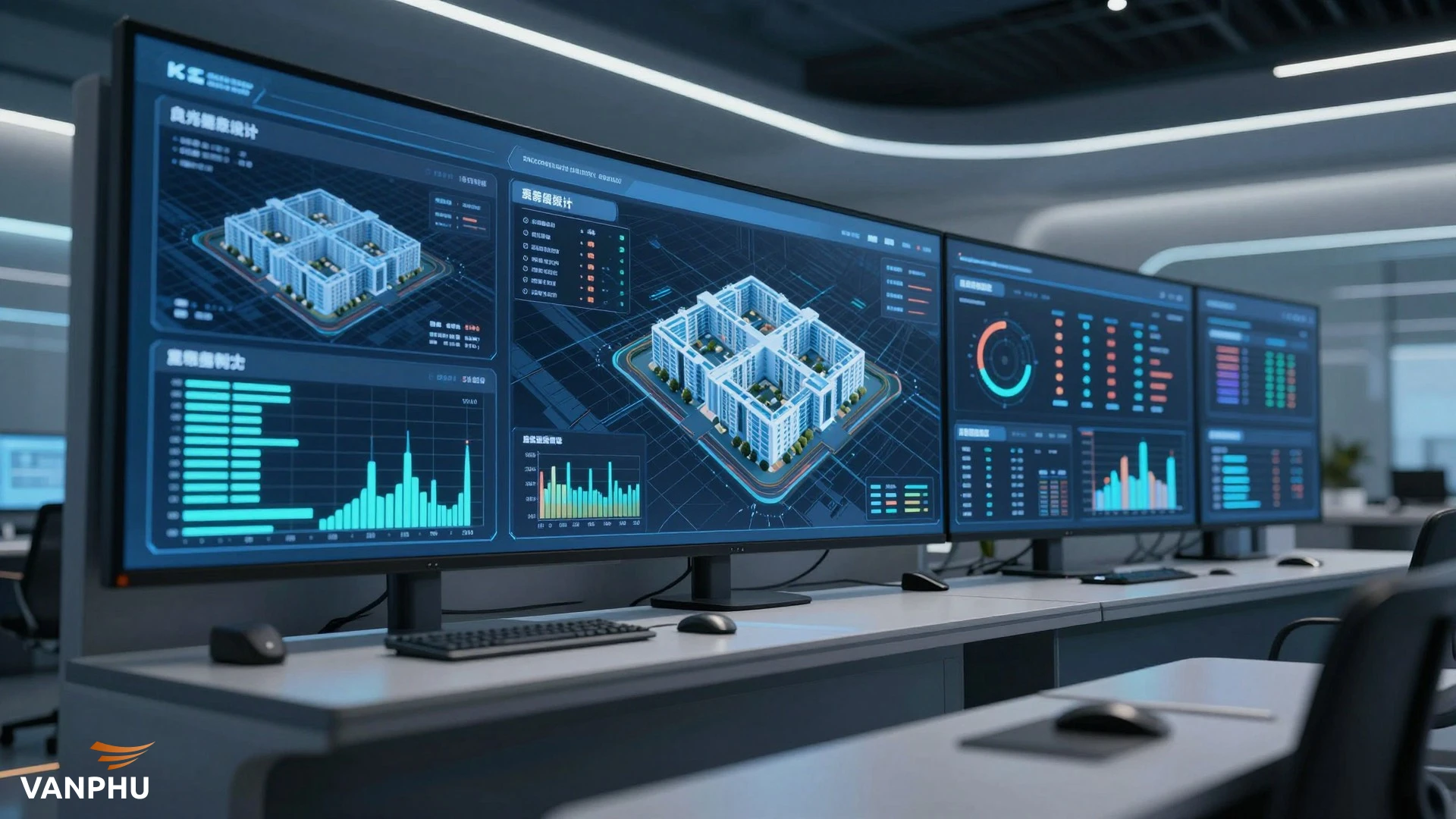
What exactly is artificial intelligence in the building sector?
Artificial intelligence refers to computer systems capable of performing tasks that typically require human intelligence. These tasks include learning, reasoning, problem-solving, and decision-making [3]. In building management, AI acts as a digital brain for the physical infrastructure.
Unlike traditional software, AI can analyze vast amounts of data to identify patterns and predict future events. It does not just follow fixed rules but adapts to changing environments. This adaptability makes it perfect for the complex ecosystem of a high-rise apartment building.
Leading developers such as Văn Phú are already exploring these advanced technologies to provide superior value to their residents. By integrating AI, they ensure that buildings are not just structures but living, breathing entities. This technological leap defines the new standard for luxury and convenience.
Why is AI-driven security essential for modern apartments?
Security remains the top priority for any apartment management board. Traditional security systems often rely on human vigilance, which is prone to error and fatigue. AI eliminates these vulnerabilities by providing 24/7 precise monitoring and instant alerts [1].
Smart surveillance cameras now come equipped with AI vision capabilities. These systems can recognize faces, detect suspicious behaviors, and even identify unauthorized vehicles. This level of precision ensures that only residents and authorized guests can access sensitive areas.
Furthermore, AI can track objects across multiple cameras simultaneously. If a person enters a restricted zone, the system alerts the security team immediately. This proactive approach prevents incidents before they escalate, ensuring a peaceful living environment for everyone.
Can facial recognition replace traditional keycards?
Facial recognition technology is rapidly replacing physical keycards and PIN codes. This method is much more secure because faces cannot be lost, stolen, or easily duplicated. It provides a seamless entry experience for residents while maintaining strict access control [4].
Modern AI systems can recognize individuals even when they are wearing masks or glasses. They process data in milliseconds, allowing doors to open automatically as a resident approaches. This convenience significantly enhances the perceived quality of the building's management.
For visitors, AI can generate temporary QR codes or use facial registration for pre-approved guests. This reduces the workload on reception staff and minimizes wait times in the lobby. Consequently, the entire check-in process becomes more professional and efficient.
How does AI vision detect fire and smoke faster?
Fire safety is another critical area where AI vision excels. Traditional smoke detectors often require physical smoke to reach the sensor, which can take several minutes. AI-powered cameras can "see" flames or smoke patterns the moment they appear [4].
These systems analyze video feeds in real-time to distinguish between actual fire and harmless light reflections. Once a threat is detected, the system triggers alarms and notifies the fire department instantly. This rapid response can save lives and prevent catastrophic property damage.
Additionally, AI can identify the exact location of the fire within the building. This information is vital for emergency responders to navigate the structure safely. It also allows the management board to initiate targeted evacuation procedures for specific floors.
How does AI optimize energy and resource management?
Energy consumption is one of the largest expenses for any large building. AI provides a powerful solution by optimizing energy usage in apartment management through automated adjustments [1]. It ensures that resources are used only when and where they are needed.
Smart algorithms monitor lighting, heating, and cooling systems based on real-time occupancy. For example, lights in common areas can dim when no one is present. Similarly, air conditioning units can adjust their output based on the number of people in a room.
This intelligent control leads to significant reductions in utility bills. It also contributes to environmental sustainability by lowering the building's carbon footprint. Modern residents increasingly value these "green" initiatives when choosing a place to live.
Why is predictive energy consumption better for the environment?
Predictive energy management goes beyond simple automation. AI analyzes historical data and weather forecasts to predict future energy demands [1]. If a heatwave is expected, the system can pre-cool the building during off-peak hours.
This strategy reduces the strain on the electrical grid during peak times. It also takes advantage of lower electricity rates, further saving money for the management board. By smoothing out energy usage, the building operates much more efficiently.
Furthermore, AI can detect anomalies in energy consumption that might indicate equipment failure. If a pump is using more power than usual, the system flags it for maintenance. This prevents unexpected breakdowns and extends the lifespan of expensive machinery.
How does AI manage water and lighting systems automatically?
Water management is often overlooked but equally important. AI sensors can detect leaks in the plumbing system that are invisible to the naked eye. By identifying these issues early, managers can prevent water waste and potential flooding [3].
In terms of lighting, AI can adjust brightness based on the amount of natural sunlight entering the building. This "daylight harvesting" ensures optimal visibility while minimizing electrical use. It creates a more comfortable environment that follows natural circadian rhythms.
Automated irrigation systems also benefit from AI. These systems check soil moisture levels and weather reports before watering the building's gardens. This ensures that plants stay healthy without wasting precious water resources.
What are the benefits of AI for apartment management boards?
Management boards face the constant challenge of balancing service quality with operational costs. AI acts as a force multiplier, allowing a small team to manage a large complex effectively. It automates repetitive tasks, freeing up staff to focus on resident relations.
One of the primary benefits is the reduction in human error. Whether it is calculating service fees or monitoring security feeds, AI is consistently accurate. This reliability builds trust between the management board and the residents.
Moreover, AI provides a comprehensive overview of the building's health. Managers can access real-time dashboards showing everything from elevator status to trash levels. This transparency allows for a more proactive and professional management style.
How does AI help in making data-driven decisions?
Data is the most valuable asset in modern building management. AI has the unique ability to collect and analyze resident data to provide actionable insights [1]. It can identify which amenities are most popular and which ones are underutilized.
For instance, if data shows that the gym is overcrowded at 6 PM, the board can adjust operating hours. If the community room is rarely used, it might be repurposed into a co-working space. These decisions are based on facts rather than guesswork.
Additionally, AI can analyze feedback from resident apps to identify common complaints. If multiple residents report issues with a specific elevator, the system prioritizes its repair. This responsiveness significantly improves resident satisfaction and retention.
Can AI reduce operational costs significantly?
The financial impact of AI is profound. By optimizing energy and reducing the need for manual labor, buildings can save up to 30% on operational costs. These savings can be reinvested into building upgrades or used to lower service fees.
Predictive maintenance is a major contributor to these savings. Repairing a small fault is much cheaper than replacing a broken-down chiller or generator. AI ensures that maintenance happens at the perfect time—not too early, and never too late [5].
Furthermore, AI helps in managing staff schedules more efficiently. By predicting peak hours for the front desk or cleaning crews, managers can optimize labor costs. Every aspect of the building's budget becomes more predictable and manageable.
How is IoT integrated with AI for smarter buildings?
The Internet of Things (IoT) provides the "senses" for the building, while AI provides the "brain." IoT consists of thousands of sensors placed throughout the structure to monitor temperature, humidity, motion, and more [5]. AI processes this massive stream of data to make intelligent choices.
This integration allows for a truly integrated IoT and AI building management system (BMS). Traditional BMS are often rigid and difficult to update. Modern AI-BMS are flexible and can connect devices from different manufacturers seamlessly.
As technology evolves, new sensors can be added without replacing the entire system. This scalability is essential for future-proofing the building. It ensures that the management board can always adopt the latest innovations as they become available.
Why is the transition from traditional BMS to AI-BMS necessary?
Traditional Building Management Systems (BMS) are often reactive. They wait for a parameter to go out of range before triggering an alarm. In contrast, an AI-BMS is proactive and predictive, identifying issues before they even occur [5].
Old systems also suffer from data silos, where the security system doesn't talk to the HVAC system. AI breaks down these silos, allowing different systems to work together. For example, the security system can tell the HVAC system to turn off the air conditioning in an empty apartment.
This holistic approach is much more efficient than managing each system in isolation. It provides a single "source of truth" for the entire building. Managers no longer need to check multiple screens to understand what is happening in their facility.
What role does AI play in the design and construction phase?
The influence of AI begins long before the first resident moves in. Architects and engineers are now using AI to create more efficient and livable building designs. This technology helps in applying AI in building design and operation to solve complex spatial problems [2].
AI can simulate thousands of design variations to find the one with the best airflow and natural light. It can also optimize the layout of apartments to maximize usable space. This results in buildings that are more comfortable and cost-effective to build.
During construction, AI monitors progress and identifies potential delays or safety hazards. It ensures that the project stays on schedule and within budget. A well-designed building is much easier for the management board to operate in the long run.
How can AI improve urban planning and interior layout?
On a larger scale, AI helps developers understand how a new building will affect the surrounding neighborhood. It can simulate traffic patterns, wind tunnels, and shadows cast on nearby structures. This ensures that the building integrates harmoniously with its environment [2].
For interiors, AI can suggest furniture layouts that optimize movement and light. You might want to learn why smart interior design is the ultimate solution for modern living. These AI-driven designs cater to the specific needs of modern urban dwellers.
By using AI in the planning phase, developers can avoid costly mistakes. They can test different materials and systems in a virtual environment before committing to them. This leads to higher quality buildings that stand the test of time.
Why is AI the key to sustainable real estate development?
Sustainability is no longer optional in the real estate industry. Governments and investors are demanding buildings that meet strict environmental standards. AI is the most effective tool for achieving these goals while maintaining profitability.
AI helps buildings achieve "Green" certifications by precisely managing resource consumption. It tracks every kilowatt of electricity and every liter of water used. This data is essential for proving the building's environmental performance to regulators.
Moreover, AI can manage renewable energy sources like solar panels and battery storage. It decides when to use stored energy and when to sell excess power back to the grid. This makes the building more self-sufficient and resilient.
How does AI support ESG reporting and carbon reduction?
Environmental, Social, and Governance (ESG) reporting is becoming a standard requirement for large developers. AI automates the collection of ESG data, making the reporting process much simpler and more accurate [5]. It provides clear evidence of carbon reduction efforts.
By analyzing emission patterns, AI identifies the "hotspots" where the building is wasting energy. Managers can then take targeted action to reduce these emissions. This continuous improvement cycle is vital for meeting long-term sustainability targets.
Furthermore, AI-driven sustainability improves the building's market value. Investors are willing to pay a premium for assets that are future-proofed against rising energy costs and environmental regulations. It is a win-win for both the planet and the bottom line.
What challenges do managers face when implementing AI?
Despite the benefits, implementing AI is not without its challenges. The initial cost of installing sensors and software can be high. Management boards must carefully calculate the return on investment (ROI) to justify the expense.
There is also the challenge of data privacy and security. Collecting facial recognition data or monitoring resident habits requires strict adherence to privacy laws. Boards must ensure that their AI systems are secure against hacking and data breaches.
Finally, there is a learning curve for the management staff. Employees need training to use these new tools effectively. However, most modern AI systems are designed with user-friendly interfaces that make them easy to adopt.
How will AI shape the future of living in Vietnam?
In Vietnam, the trend toward smart cities and intelligent buildings is accelerating. As urban density increases, the need for efficient management becomes more critical. You can explore why satellite city development is the future of Vietnam's urban landscape to see the bigger picture.
AI will play a central role in these new developments. We can expect to see buildings that are fully autonomous, capable of maintaining themselves with minimal human intervention. Residents will enjoy a level of safety and convenience that was once the stuff of science fiction.
The management board of the future will be more like a technology team. They will use AI to create vibrant, sustainable communities where people love to live. The journey toward intelligent building management has only just begun, and the possibilities are endless.
More Information
- Energy Optimization [1]: The use of AI to monitor and adjust electrical and water systems based on real-time demand, significantly reducing waste and operational costs.
- Generative Design [2]: An AI-driven process where software explores thousands of design possibilities to find the most efficient architectural and structural solutions.
- Predictive Maintenance [3]: A technique that uses AI data analysis to predict when equipment might fail, allowing for repairs before a breakdown occurs.
- AI Vision [4]: Advanced computer vision technology that enables cameras to recognize faces, detect fire, and analyze human behavior for enhanced security.
- ESG Reporting [5]: The process of documenting a building's Environmental, Social, and Governance performance, often automated by AI to ensure accuracy and sustainability.