The Future of Technology: Shaping Our World and Beyond

Technology constantly evolves, profoundly impacting every aspect of human life. It has become indispensable, especially during global challenges like the COVID-19 pandemic. During this period, technology played a strategic role, helping individuals and businesses adapt quickly and even thrive [1]. As we look ahead, understanding these advancements is crucial for both individuals and organizations.
This article explores the leading technological trends. It also examines how they are poised to redefine our future. We will delve into the core innovations driving this digital transformation.
The foundational pillars: artificial intelligence, internet of things, and big data
Artificial Intelligence (AI), the Internet of Things (IoT), and Big Data stand as the primary pillars of our digital age [5]. These technologies are not just changing how we live, work, and communicate. They are also creating an explosive demand for highly skilled professionals.
Artificial intelligence: intelligence reimagined
AI, or Artificial Intelligence, simulates human thought and learning processes in machines [1]. Unlike traditional logic programming, AI systems can think, reason, and make decisions. They also possess the ability to learn and communicate. This makes them far more akin to human intelligence.
AI is already integrated into various applications. These include image and voice recognition, navigation systems, and personal assistants on smartphones [1]. By 2030, human-like AI could become a reality. This is due to exponential improvements in computer processing power, voice recognition, image recognition, and deep learning algorithms [2].
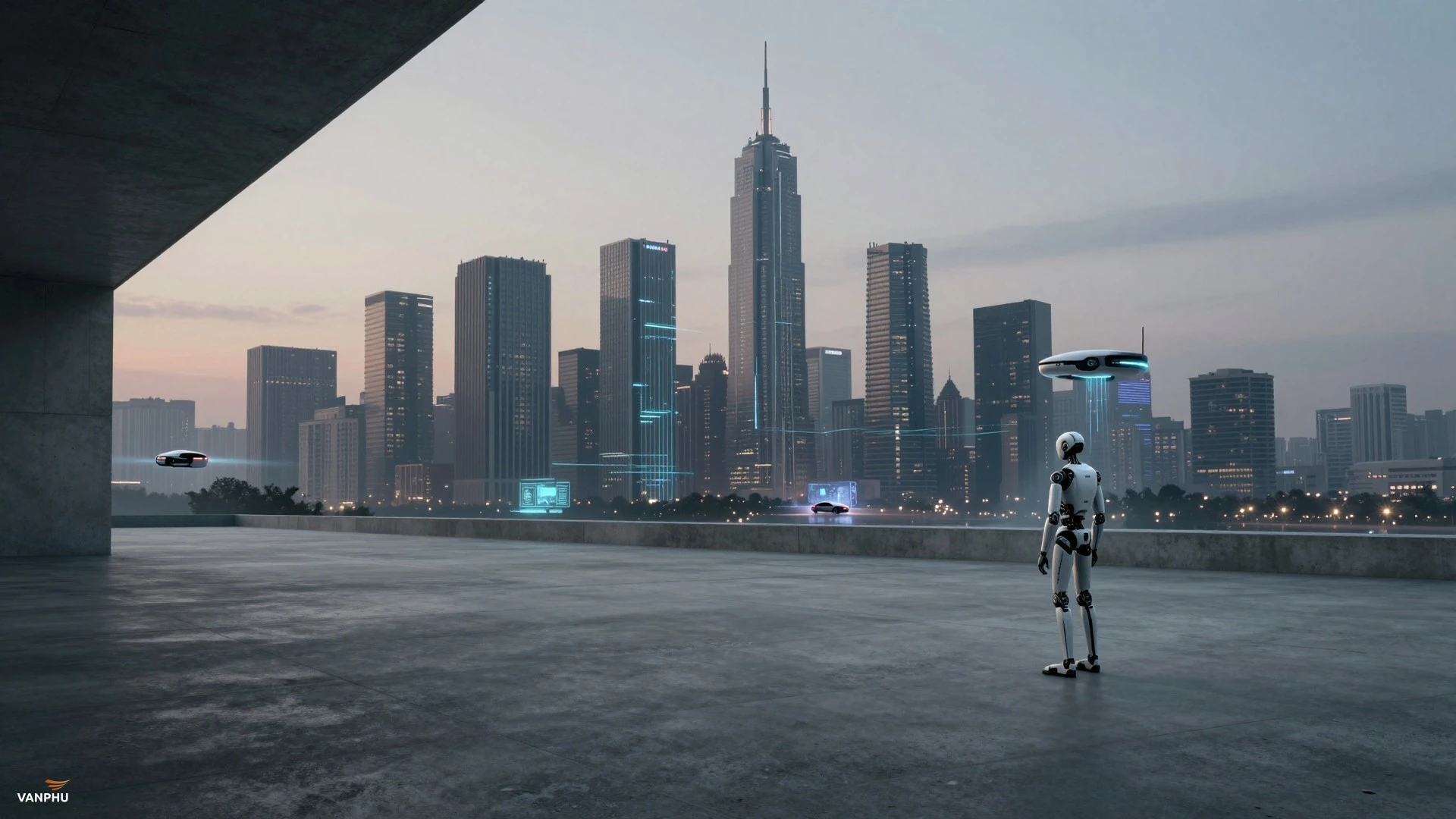
Natural Language Processing (NLP) technologies, such as GPT-3, are constantly advancing. They are rapidly surpassing previous benchmarks [2]. Experts predict that AI may soon pass the Turing Test. This test assesses a machine’s ability to exhibit intelligent behavior indistinguishable from a human. Such advancements could lead to highly nuanced AI-powered virtual assistants. They could also create realistic characters in virtual worlds and video games [2].
Machine Learning (ML), a subset of AI, allows computers to improve themselves. They learn from training data or past experiences [1]. ML is commonly used for predictive tasks, like forecasting property or vehicle prices. It also excels in classification problems, such as handwriting or object recognition. The AI market is projected to reach $407 billion by 2027 [5]. Additionally, 64% of global businesses are expected to adopt AI to boost production efficiency. This underscores AI’s immense potential to shape our technological future [5].
The internet of things: connecting our world
The Internet of Things (IoT) is an essential technology. It creates a seamless network of continuously connected devices [3]. Businesses leverage IoT to share data and information in real-time between devices. The global IoT market was valued at over $260 billion in 2021 [3]. This rapid growth suggests a massive increase in IoT-related data. Forecasts indicate IoT data could exceed 79 zettabytes by 2025 [3].
IoT connects everything to the internet. This enables complete automation and remote control, from household appliances to industrial machinery [5]. It provides real-time data on user behavior, machine status, and environmental conditions. This information is invaluable for analysis and optimization across many sectors. For instance, IoT is widely adopted in automotive, telecommunications, smart homes, and wearable technology [3].
Big data: the new digital asset
If AI focuses on automation and intelligent experiences, and IoT on boundless connectivity, then Big Data is the critical asset [5]. It profoundly impacts business operations and production. Big Data involves collecting, processing, and analyzing vast and complex datasets. This allows organizations to uncover hidden patterns, market trends, and customer preferences. Ultimately, it drives informed decision-making.
The synergy between AI, IoT, and Big Data is transformative. IoT devices generate massive amounts of data. AI algorithms then process and analyze this Big Data. This creates intelligent systems that can automate tasks, predict outcomes, and personalize experiences. This powerful combination is driving innovation across industries.
Immersive realities: virtual and augmented experiences
Virtual Reality (VR) and Augmented Reality (AR) are rapidly evolving. They offer new ways to interact with digital content and the physical world [3]. By 2030, most VR displays are expected to feature 8K resolution. This is four times the pixel count of 4K screens [2]. Such high resolution will eliminate visible pixelation, delivering spectacular detail and realism. This applies to character models and objects.
Other hardware upgrades will further enhance VR gaming. They will provide near-zero latency and wider fields of view [2]. Additionally, haptic suits are becoming more common. These suits will add a tactile dimension to virtual experiences. They will allow users to feel sensations within the virtual world. This creates a truly immersive and multi-sensory environment. For more insights into these transformative technologies, you can explore resources like 20 leading technologies of the future.
The backbone: cloud computing and advanced infrastructure
Cloud computing is increasingly popular across many industries and fields [1]. The term “Cloud” refers to the internet. It encompasses all software and databases accessed remotely online. Data stored in the Cloud resides on virtual servers over the internet. This eliminates the need for local storage [1]. Cloud technology provides the scalable, on-demand computing resources essential for modern applications.
The AI ecosystem, as showcased at events like GTC 2026, highlights this interdependence [4]. AI is no longer a single company’s domain. It is a collaborative ecosystem of hardware, software, cloud services, data, and real-world applications. Infrastructure giants like Intel provide crucial CPUs, such as the Xeon 6, for NVIDIA’s next-gen DGX systems. This demonstrates a shift towards heterogeneous computing. In this model, CPUs manage coordination, while GPUs handle intensive computational tasks [4].
Companies like Dell Technologies, Hewlett Packard Enterprise, and Supermicro offer “AI factory” solutions. These are data centers specifically optimized for AI, integrating GPUs, networking, and software into a complete architecture [4]. Storage and data solutions from IBM support large-scale AI deployments, especially where security and compliance are paramount. Memory manufacturers like SK hynix also contribute advanced memory technologies. These are vital for high-performance AI systems, underscoring memory’s critical role in modern AI infrastructure [4].
The software component is equally crucial. The Nemotron alliance, comprising companies like Mistral AI, Perplexity, LangChain, and Cursor, is developing new open AI models. They leverage DGX infrastructure to push the boundaries of AI capabilities [4]. This collaborative approach ensures rapid innovation and broader accessibility of advanced AI tools. EON Tech, for instance, has been at the forefront of applying AI to solve these real-world challenges.
Emerging frontiers: bioengineering and blockchain
Beyond the digital realm, bioengineering represents another significant future trend [3]. This field combines engineering principles with biological sciences. It aims to develop innovative solutions for healthcare, agriculture, and environmental challenges. Advances in genetic engineering, tissue regeneration, and personalized medicine hold immense promise for improving human health and quality of life.
Blockchain technology, known for its decentralized and secure nature, also continues to evolve [3]. While often associated with cryptocurrencies, its applications extend far beyond. Blockchain can provide secure and transparent record-keeping for supply chains, digital identity, and intellectual property. Its ability to ensure data integrity and trust will be increasingly vital as our digital world expands. You can learn more about these trends and others by reading about top 6 future technology trends.
Transforming industries and daily life
These future technologies are not isolated advancements. They work in concert to transform industries and daily life. For example, the combination of AI and IoT will lead to smarter homes, intelligent transportation systems, and advanced healthcare solutions [1]. Self-driving cars, for instance, are becoming a reality. By 2030, one in ten cars is predicted to be autonomous [5]. This will revolutionize transport and logistics.
The rapid evolution of technology also creates new demands for a skilled workforce. Individuals and businesses must adapt and embrace continuous learning. This ensures they remain competitive and relevant in this fast-changing landscape. Understanding these trends is key to harnessing their potential. It also helps in mitigating associated risks. Further exploration into this topic can be found in our article: Unlocking tomorrow: exploring the transformative power of future technology.
Conclusion: embracing the technological revolution
The future of technology promises unprecedented changes. It offers incredible opportunities for innovation and growth. From human-like AI to immersive VR experiences and interconnected IoT devices, these advancements will redefine our world. They will impact how we interact with our environment and each other.
For businesses, staying informed and strategically investing in these technologies is paramount. For individuals, understanding these trends empowers better decision-making and career planning. The digital revolution is not just coming; it is already here. Embracing it with knowledge and foresight is the path to a prosperous future. We encourage you to continue exploring these exciting developments and prepare for the world of tomorrow.
More Information
- Artificial Intelligence (AI): A branch of computer science that simulates human intelligence processes by machines, including learning, reasoning, problem-solving, perception, and language understanding.
- Internet of Things (IoT): A network of physical objects embedded with sensors, software, and other technologies for the purpose of connecting and exchanging data with other devices and systems over the internet.
- Big Data: Extremely large datasets that may be analyzed computationally to reveal patterns, trends, and associations, especially relating to human behavior and interactions.
- Virtual Reality (VR): A simulated experience that can be similar to or completely different from the real world, typically achieved by wearing a head-mounted display.
- Cloud Computing: The delivery of on-demand computing services—from applications to storage and processing power—typically over the internet with pay-as-you-go pricing.