What are the emerging coworking space trends shaping the future of work in 2025?
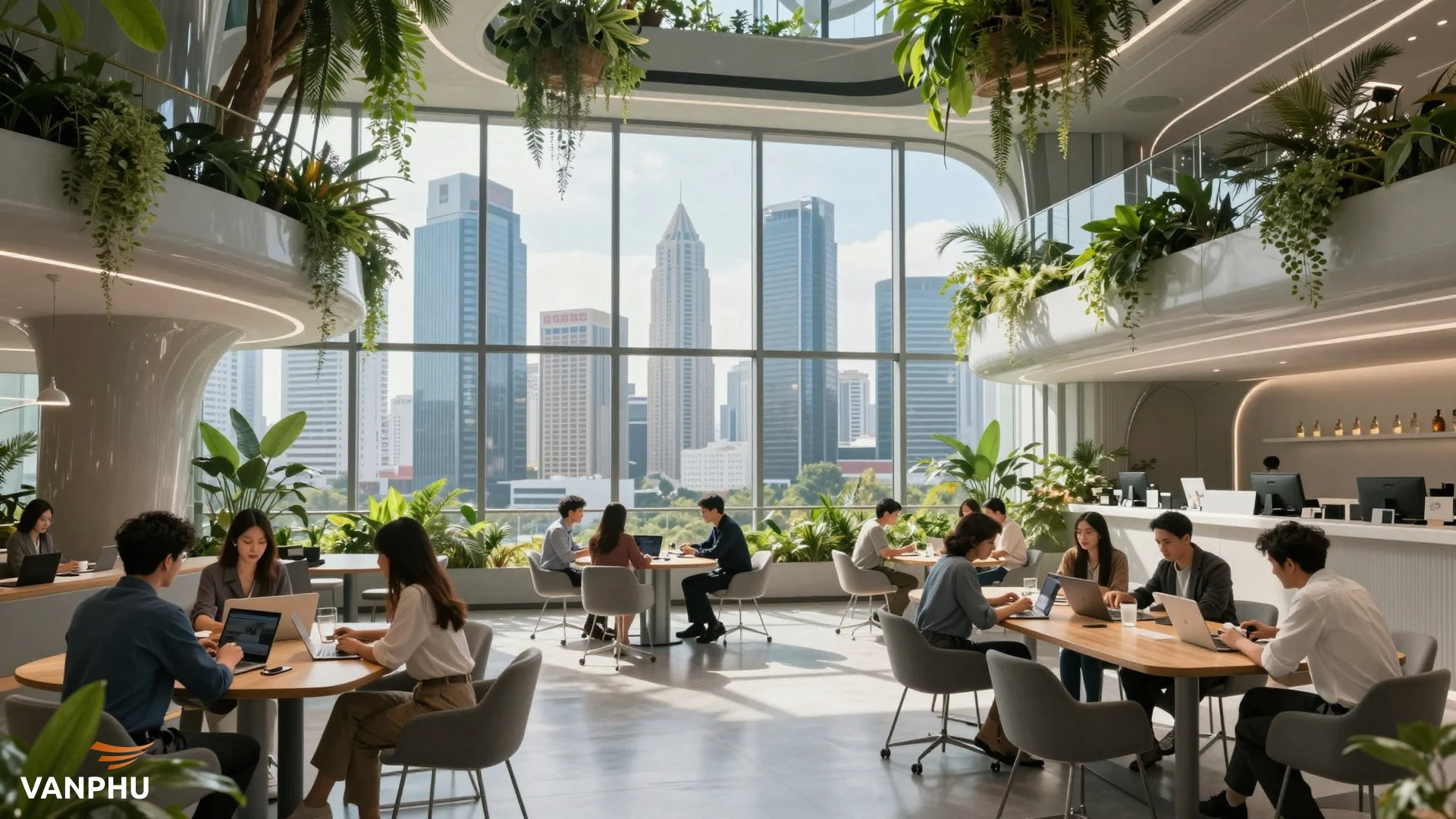
The global landscape of professional environments is undergoing a radical transformation. Traditional office structures are no longer the sole standard for productivity. Instead, a more fluid and community-driven model has taken center stage. Coworking spaces have evolved from simple shared desks into sophisticated ecosystems that foster innovation and networking. This shift is particularly evident in rapidly developing markets where flexibility is a core business requirement.
In Vietnam, the coworking phenomenon is not just a passing fad but a structural change in the real estate sector. As startups and freelancers multiply, the demand for professional yet adaptable environments has skyrocketed. This article explores the critical trends, design philosophies, and market shifts that will define the coworking industry over the next decade. We will examine how these spaces are adapting to the needs of a diverse workforce, from solo entrepreneurs to multinational corporations.
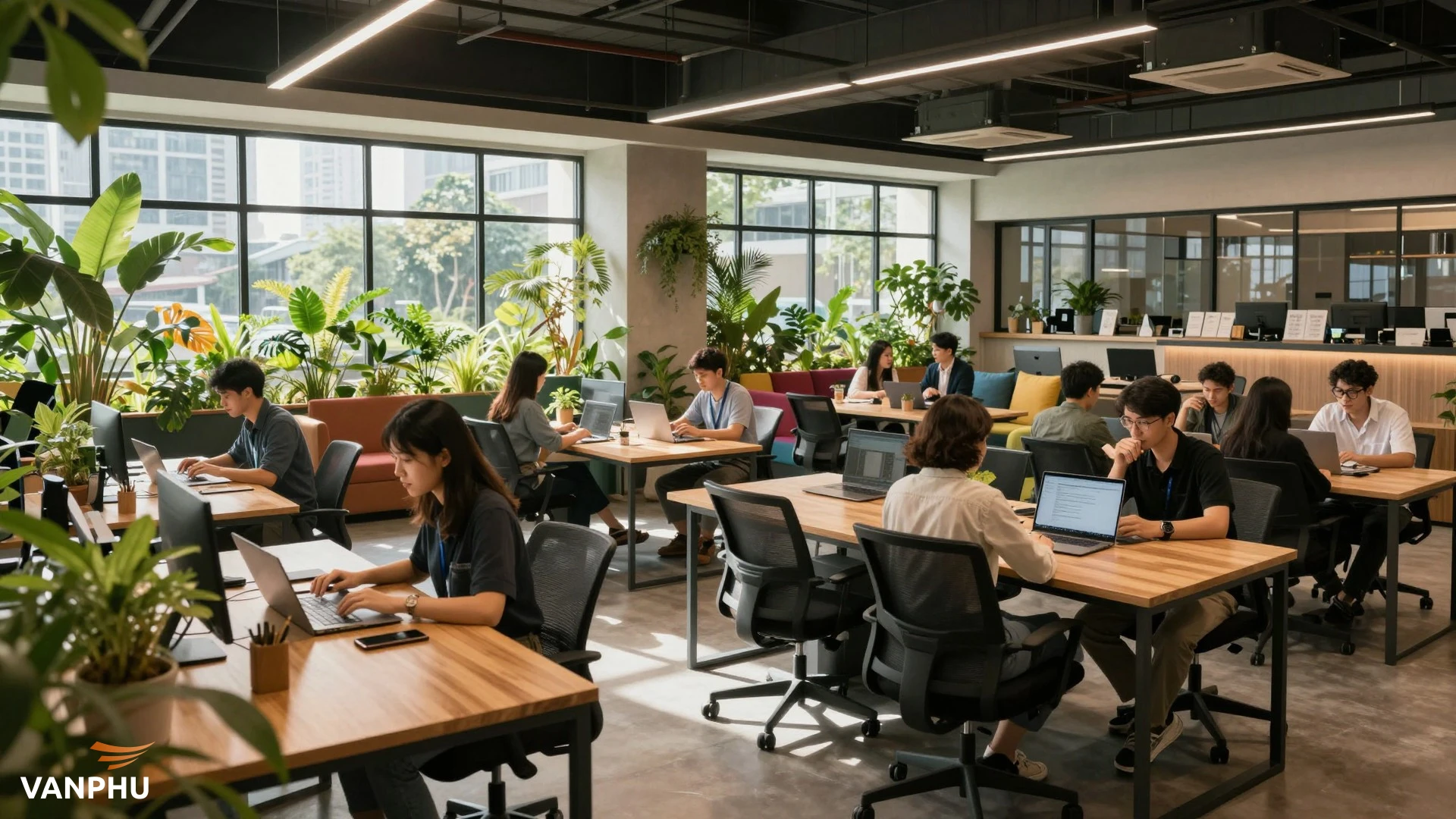
Why is the coworking market in Vietnam experiencing such rapid growth?
The growth of the coworking market in Vietnam is driven by a combination of economic vitality and a youthful demographic. Since its inception around 2012, the industry has transitioned from small-scale operations to a massive network of high-end facilities.[1] Initially, these spaces were concentrated in the central business districts of Hanoi and Ho Chi Minh City. However, the scope has expanded significantly as the startup ecosystem matured.
Between 2017 and 2019, the market witnessed an unprecedented boom. Statistics show that the number of coworking locations increased by 62% in 2017 alone, followed by a staggering 95% growth in 2018.[5] This surge was fueled by the rise of the "startup nation" spirit and an increasing number of freelancers. High-profile visits, such as those by global tech leaders, further validated the importance of these collaborative hubs for the local economy. Today, the market continues to expand with an annual growth rate of approximately 15-20%.[1]
Furthermore, the pandemic acted as a catalyst for change rather than a permanent deterrent. While it initially caused a slowdown, it ultimately popularized the hybrid work model. Many businesses realized that maintaining large, permanent offices was no longer cost-effective. Consequently, they turned to flexible workspaces to optimize their operational expenses. This shift has led to a more diverse clientele, including large enterprises looking for satellite offices or project-based workspaces.
How has the history of shared offices evolved in major Vietnamese cities?
The evolution of shared offices in Vietnam is a story of rapid adaptation. In the early 2010s, the concept was largely foreign to the local business community. Most professionals were accustomed to traditional, rigid office leases that required long-term commitments and heavy upfront investment. The introduction of coworking spaces offered a breath of fresh air, providing "plug-and-play" solutions that eliminated the need for complex renovations or equipment purchases.[1]
By 2015, the market began to attract international attention. Local pioneers like Toong and Dreamplex paved the way, followed by global giants. These operators didn't just sell desk space; they sold a lifestyle and a community. They organized networking events, workshops, and social gatherings that helped members grow their businesses. This community-centric approach remains a cornerstone of the industry today.[5]
In recent years, the focus has shifted toward quality and specialization. Operators are no longer just providing a place to sit; they are creating environments tailored to specific industries or work styles. In Ho Chi Minh City, for example, new brands like Komune are entering the market to serve the growing demand in satellite urban areas.[4] These areas offer modern infrastructure and lower rents compared to the crowded city center, making them attractive for both operators and tenants.
What design styles are currently dominating modern coworking environments?
Design is a critical differentiator in the competitive coworking market. A well-designed space does more than just look good; it enhances productivity and well-being. Modern designs focus on balancing aesthetics with functionality.[2] One of the most prominent trends is the "Eco" or biophilic style. This involves integrating natural elements like plants, natural light, and organic materials into the workspace. Research suggests that these elements reduce stress and boost creativity.
Another popular approach is the minimalist style. By stripping away distractions and focusing on clean lines and neutral colors, minimalist spaces help workers maintain focus. This design is particularly favored by tech professionals and writers who require a calm environment. On the other end of the spectrum, creative designs use bold colors and unique layouts to stimulate the mind. These spaces often feature unconventional furniture and interactive zones that encourage spontaneous collaboration.[2]
Smart and modern designs are also on the rise. These spaces leverage technology to improve the user experience. Features like automated lighting, smart climate control, and high-tech meeting rooms are becoming standard. Additionally, the integration of cafes within coworking spaces has become a major trend. This "coffice" model provides a more relaxed atmosphere where members can work while enjoying premium coffee and snacks. This hybrid approach blurs the line between work and leisure, catering to the modern professional's desire for a balanced lifestyle.
Why is the eco-friendly design approach becoming a standard?
The shift toward eco-friendly design is driven by both environmental concerns and employee preferences. Modern workers are increasingly conscious of their ecological footprint. They prefer to work in buildings that prioritize sustainability. This has led to a surge in "green" coworking spaces that use recycled materials and energy-efficient systems.[3] These spaces often seek certifications like LEED or Lotus to prove their commitment to the environment.
Beyond the environmental benefits, green spaces offer significant health advantages. Better air quality and access to greenery can lower heart rates and improve cognitive function. For operators, investing in green features can lead to long-term cost savings through reduced energy consumption. This alignment of values between operators and members is making sustainability a non-negotiable aspect of new developments. Prominent developers like Văn Phú are recognizing the shift toward integrated urban complexes that include flexible working components as part of a sustainable lifestyle.
Furthermore, why is certified green real estate the ultimate strategy for modern developers? It is because such certifications increase the asset's value and attract high-quality tenants. In the coworking sector, a "green" label can be a powerful marketing tool. It signals that the operator is forward-thinking and cares about the well-being of its community. This trend is expected to intensify as ESG (Environmental, Social, and Governance) standards become more prevalent in the corporate world.[1]
How does minimalist design enhance productivity for freelancers?
Minimalism in the workplace is about more than just a lack of clutter. It is a philosophy that prioritizes essential elements to create a sense of order and peace. For freelancers, who often juggle multiple projects and deadlines, a minimalist environment can be a sanctuary. By removing visual noise, these spaces allow the brain to focus entirely on the task at hand.[2]
Minimalist spaces typically feature open layouts with plenty of white space. This creates a feeling of expansiveness, even in smaller offices. The furniture is usually functional and ergonomic, ensuring comfort during long working hours. This design choice also makes the space more versatile. A minimalist lounge can easily be converted into a workshop area or a presentation space, providing the flexibility that freelancers need. To understand more about the role of aesthetics in functionality, one might ask why is smart interior design the ultimate solution for modern living? as it applies directly to these professional settings.
Moreover, minimalism fosters a professional image. When freelancers meet clients in a clean, well-organized space, it reflects positively on their work ethic. It suggests a level of discipline and attention to detail that is highly valued in the gig economy. As the number of independent professionals continues to grow, the demand for these focused, distraction-free environments will likely remain strong.
Why are green and sustainable coworking spaces the new investment priority?
Investors are increasingly looking at "green" coworking spaces as a resilient asset class. The demand for sustainable offices is not just coming from small startups but also from large multinational corporations. These companies have strict ESG targets and need their office providers to align with those goals.[3] Consequently, coworking spaces that prioritize sustainability are seeing higher occupancy rates and better tenant retention.
The "green" trend is also a response to the changing urban landscape. As cities become more congested, the need for "third places"—locations that are neither home nor a traditional office—becomes more acute. These third places, especially when designed with greenery and natural light, provide a much-needed escape from the urban grind. The rise of green coworking investments reflects a broader shift toward wellness-oriented real estate. Investors realize that a healthy building is a more profitable building in the long run.
In Vietnam, this trend is particularly visible in the high-end segment. New developments are incorporating solar panels, rainwater harvesting systems, and advanced air filtration. These features are no longer just "nice to have"; they are becoming essential for attracting top-tier members. As the market matures, the gap between standard offices and sustainable, high-performance workspaces will continue to widen, with the latter commanding a premium in rental prices.
How is Gen Z transforming the requirements for flexible workspaces?
Gen Z, the generation born between 1997 and 2012, is rapidly entering the workforce and bringing a new set of expectations. Unlike previous generations, Gen Z prioritizes flexibility, purpose, and community over traditional corporate perks. They are digital natives who are comfortable working from anywhere, but they still value face-to-face interaction.[3] This has led to a demand for coworking spaces that offer a blend of high-tech infrastructure and social connectivity.
For Gen Z, the office is not just a place to work; it is a place to connect with like-minded individuals. They look for spaces that host networking events, mentorship programs, and social mixers. They also value authenticity and social responsibility. A coworking space that supports local artists or hosts charity events is more likely to attract Gen Z members. This generation is also very sensitive to the physical environment, demanding ergonomic furniture, good lighting, and aesthetic interiors that are "Instagrammable."
Furthermore, Gen Z's preference for hybrid work is forcing companies to rethink their real estate strategies. Many young professionals do not want to commute to a central office every day. They prefer to work from a local coworking space that is close to home but still offers a professional atmosphere. This "hub-and-spoke" model is becoming increasingly popular, with companies maintaining a small central headquarters and providing employees with memberships to coworking networks across the city.[3]
Which satellite urban areas are becoming the next coworking hubs?
As central business districts (CBDs) become increasingly expensive and congested, the coworking market is expanding into satellite urban areas. In Ho Chi Minh City, areas like Phu My Hung in District 7 and Thu Thiem in Thu Duc City are emerging as major hubs. These locations offer modern infrastructure, better air quality, and a more relaxed lifestyle, all while being just a short drive from the city center.[4]
The expansion into these areas is driven by the "decentralization" of work. Many professionals now live in these satellite cities and want to avoid the long commute to the CBD. Operators are responding by opening high-quality spaces in these residential zones. For instance, the entry of international brands like Komune into Phu My Hung highlights the potential of these markets.[4] These spaces serve not only local residents but also the many international schools and businesses located in the area.
This trend is also visible in Hanoi, where areas like Cau Giay and Nam Tu Liem are seeing a surge in coworking activity. These districts are home to many tech companies and startups that prefer the flexibility and lower costs of shared offices. The development of new metro lines and improved road networks is further facilitating this expansion, making it easier for people to move between different hubs. In the next five years, satellite areas are expected to account for a significant portion of the total coworking supply.[1]
What role does technology play in the next generation of shared offices?
Technology is the backbone of the modern coworking experience. It is no longer just about providing fast Wi-Fi; it is about creating a seamless, "frictionless" environment for members. Many operators are now using dedicated apps that allow members to book desks, reserve meeting rooms, and pay for services with a few taps on their smartphones.[4] These apps also serve as a community platform where members can interact and share resources.
The Internet of Things (IoT) is another game-changer. Smart sensors can monitor occupancy levels in real-time, helping operators optimize the use of space. They can also adjust lighting and temperature based on the number of people in a room, reducing energy waste. In some high-end spaces, facial recognition technology is used for secure access, eliminating the need for physical keycards. These technological advancements not only improve efficiency but also enhance the sense of security and convenience for members.
Looking ahead, we can expect to see even more advanced technologies like virtual and augmented reality (VR/AR) being integrated into coworking spaces. These tools could allow remote teams to collaborate in a virtual environment that feels like a physical office. As technology continues to evolve, the definition of a "workspace" will become even more fluid, with the physical and digital worlds blending into a single, cohesive experience. Technology integration in coworking is no longer an option but a necessity for survival in this fast-paced industry.
How do coworking spaces compare to traditional office setups for startups?
For startups, the choice between a coworking space and a traditional office is often a matter of survival. Traditional offices require a significant capital outlay for deposits, renovations, and furniture. They also involve long-term leases that can be a major liability for a young company with an uncertain future. Coworking spaces, on the other hand, offer a low-risk alternative with flexible terms.[1]
Beyond the financial aspects, coworking spaces provide startups with immediate access to a professional network. Being surrounded by other entrepreneurs, investors, and service providers can lead to valuable partnerships and growth opportunities. Startups can also benefit from the shared amenities, such as high-end meeting rooms and event spaces, which they would likely be unable to afford on their own.[2]
However, as a startup grows, it may eventually outgrow the coworking model. Once a team reaches a certain size, the cost per person in a coworking space can become higher than renting a private office. There are also concerns about privacy and brand identity in a shared environment. Many operators are addressing this by offering "private suites" or "enterprise solutions" that provide the benefits of coworking while maintaining the privacy of a traditional office. This hybrid approach allows companies to scale up or down as needed without the headaches of traditional leasing.
What are the primary challenges facing coworking operators today?
Despite the positive outlook, the coworking industry faces several significant challenges. One of the biggest is the high cost of real estate in prime locations. Operators must balance the need for a central, attractive location with the necessity of keeping membership fees competitive. This has led to a "margin squeeze" for many players, especially those who do not own their buildings.[5]
Another challenge is the increasing competition. As the market becomes more crowded, operators must find ways to differentiate themselves. This often requires heavy investment in design, technology, and community management. Maintaining a high level of service is also difficult as a network expands. Operators must ensure that the "vibe" and quality of their spaces remain consistent across multiple locations.[5]
Finally, the industry is sensitive to economic fluctuations. During a downturn, freelancers and startups are often the first to cut costs, which can lead to a drop in occupancy. To mitigate this risk, many operators are diversifying their member base to include more established corporations. They are also exploring new revenue streams, such as hosting public events, offering virtual office services, and providing consulting for companies looking to transition to flexible work models. Market analysis for coworking investors emphasizes the need for operational excellence to navigate these hurdles.
How should businesses choose the right coworking space for their needs?
Choosing the right coworking space requires a careful assessment of both practical and cultural factors. The first step is to define the primary goal. Is it to save money, to be part of a community, or to have a prestigious address for meeting clients? Once the goal is clear, businesses should consider the location. It should be easily accessible for employees and close to relevant amenities like public transport and cafes.[2]
The next consideration is the level of flexibility. Some spaces offer daily passes, while others require monthly or yearly commitments. Businesses should look for a provider that can accommodate their growth. The quality of the infrastructure is also vital. This includes not just the speed of the internet but also the comfort of the chairs, the availability of meeting rooms, and the quality of the coffee.[2]
Finally, the "community" aspect should not be overlooked. It is worth visiting a space during working hours to get a feel for the atmosphere. Are people interacting, or is everyone wearing headphones? Does the operator organize events that are relevant to your industry? The right coworking space should feel like more than just a place to work; it should feel like a place where your business can thrive. Choosing a design style that matches your company culture is a great starting point for this search.
What does the future hold for the coworking industry in 2030?
By 2030, coworking will likely no longer be seen as an "alternative" to the traditional office but as a core component of the global real estate market. Estimates suggest that up to 20% of the global workforce will be using some form of shared workspace by the end of the decade.[3] The industry will become more specialized, with spaces dedicated to specific niches like biotech, hardware development, or the creative arts.
Sustainability will be at the heart of every new development. "Net-zero" coworking spaces that produce as much energy as they consume will become the gold standard. We will also see a greater integration of work and life, with coworking spaces being built into residential complexes, shopping malls, and even transportation hubs. This "15-minute city" concept, where everything a person needs is within a short walk or bike ride, will be a major driver of the industry's growth.
Ultimately, the success of the coworking industry will depend on its ability to remain human-centric. In an increasingly digital world, the need for physical connection and community will only grow. Coworking spaces that can provide a sense of belonging while offering the latest technology and sustainable design will be the ones that lead the way into the future. The journey from 2025 to 2030 will be one of refinement and expansion, solidifying the shared office as a permanent fixture of the modern world.
More Information
- Coworking Space [1]: A shared work environment where individuals from different companies work together, offering flexibility and community benefits compared to traditional long-term office leases.
- Hot Desking [2]: A workspace system where desks are used by different people at different times on a first-come, first-served basis, maximizing space efficiency.
- ESG Standards [3]: Environmental, Social, and Governance criteria used by investors to evaluate a company's impact on the world and its sustainability practices.
- Hybrid Work [4]: A flexible working model that allows employees to split their time between working from a central office, a coworking space, and home.
- Satellite Office [5]: A branch office located away from a company's main headquarters, often used to reduce commute times for employees living in suburban areas.