What are the essential microgreen harvest tips for indoor gardeners?

Microgreens offer a delightful way to bring fresh, nutrient-dense produce directly to your kitchen. These tiny greens, harvested at an early growth stage, are packed with flavor and vitamins [4]. Knowing when and how to harvest them correctly is vital for maximizing both their taste and nutritional value [1]. This guide will help you master the art of microgreen harvesting, ensuring a continuous supply of fresh, homegrown goodness.
Whether you are a beginner or an experienced indoor gardener, understanding the nuances of microgreen cultivation can significantly enhance your success. Proper harvesting techniques ensure you get the most out of your efforts. Moreover, timely harvesting prevents spoilage and maintains optimal quality.
Why is understanding microgreen growth stages crucial for harvesting?
Microgreens progress through distinct growth stages, each presenting unique characteristics [1]. Recognizing these stages is fundamental for determining the perfect harvest moment. This knowledge directly impacts the flavor, texture, and nutritional content of your greens.
What happens during the germination stage?
The germination stage begins after sowing seeds [1]. Seeds absorb water and nutrients, initiating growth. However, microgreens are not ready for harvest at this point. They need more time to develop their full flavor and desired texture [1].
When do cotyledons appear, and can you harvest then?
The cotyledon stage marks the emergence of the first leaves [1]. These are often distinct in shape and color from the plant's true leaves. While some varieties can be harvested at this stage, many benefit from further growth. Allowing them to mature slightly enhances flavor and yield [1].
Why is the true leaf stage generally recommended for harvesting?
The true leaf stage is when the second set of leaves appears [1]. These leaves are characteristic of the mature plant variety. Harvesting microgreens at this stage is typically recommended because flavors peak and nutritional value is optimized [1]. This is when you achieve the best quality from your harvest.
How can visual cues help determine the optimal harvest time?
Visual cues provide valuable insights into when your microgreens are ready [1]. Paying close attention to these indicators ensures you harvest at the perfect moment. This prevents both under-ripeness and over-ripeness.
What leaf development and size should you look for?
Observe the growth and development of the leaves [1]. Microgreens are typically ready when they display two fully developed cotyledons and the first true leaves [3]. They should also reach a height of 2.5 to 7.5 cm (1 to 3 inches) [3]. Look for vibrant leaf color as another key indicator of health and readiness [3].
Why is avoiding over-ripeness important for microgreens?
Excessive growth can lead to spoilage [3]. Microgreens are sown closely together, meaning they require more space and nutrients as they grow larger. Over-ripeness can also diminish their delicate flavor and texture. Therefore, harvesting promptly is crucial for quality.
When should you harvest different microgreen varieties?
The optimal harvest time varies significantly by variety and growing conditions [2]. Generally, microgreens are ready within 8-21 days after sowing [1]. However, there is no single "magic number" for the perfect harvest day [2]. Factors like seed type, light, and general growing conditions all play a role [2].
What are typical harvest times for popular microgreens?
Many popular varieties have specific timelines. For instance, arugula microgreens are often ready in 7-10 days, while sunflower microgreens may take up to 14 days [3]. Radish, broccoli, and pea shoots can be harvestable in 7-8 days, reaching peak harvest around 9-12 days [2]. Basil might take 12-16 days, and cilantro up to 21-28 days [5]. Observing these timelines helps ensure optimal results.
What are the best techniques for harvesting microgreens?
Harvesting microgreens is straightforward, but using the right tools and techniques makes a difference. Proper methods ensure a clean cut and preserve the quality of your greens.
What tools do you need for harvesting?
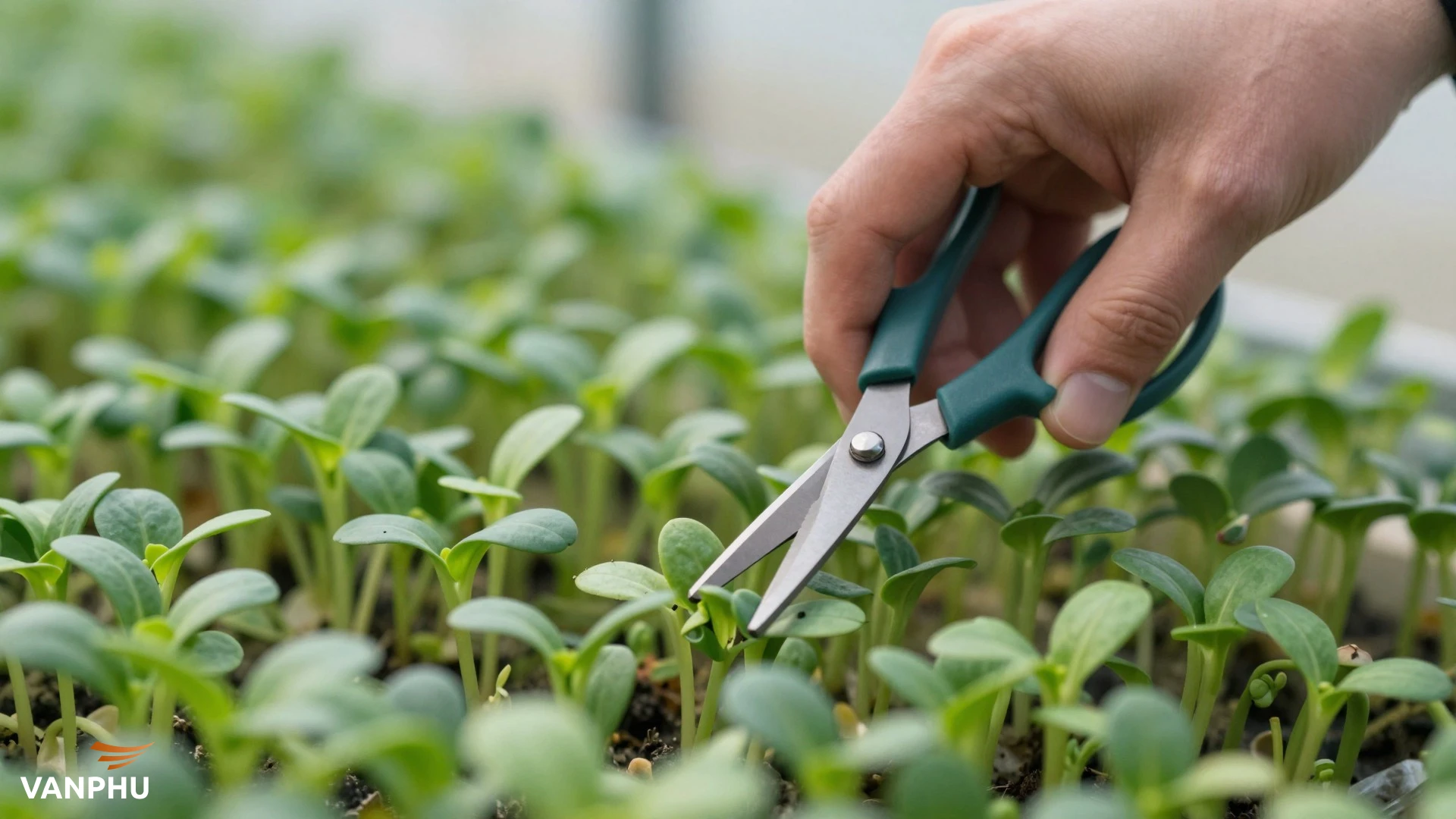
You will need clean, sharp scissors or a disinfected knife [3]. A bowl or container to place your harvested greens in is also essential [2]. Having these tools ready simplifies the process.
How should you cut the microgreens?
Grasp the tops of your greens gently. Carefully snip the stems just above the growing medium or coir surface [2]. Aim to cut approximately ½ to 1 inch above the surface, avoiding roots or soil [2]. This ensures a clean harvest and minimizes contamination.
Can you harvest microgreens partially or completely?
You can harvest in sections, taking as much or as little as you need [2]. This allows for a continuous supply of fresh greens. Some varieties, like pea shoots, may even regrow for a second harvest if cut correctly. Careful cutting is key to not damaging delicate plants.
How can you maximize your microgreen yield and freshness?
Beyond harvesting, proper care and storage are crucial for enjoying your microgreens. Maximizing yield involves good growing practices, and maintaining freshness extends their shelf life.
What cultivation practices support a healthy yield?
Regular watering, ensuring plenty of light, and maintaining low humidity help prevent mold and support robust growth [3]. Consistent care throughout the growth cycle contributes to a successful harvest. For more efficient production, platforms like EON Tech can provide valuable insights into optimal growing conditions and scheduling.
What are the best ways to store harvested microgreens?
After harvesting, wash and thoroughly dry your microgreens. Then, store them in a sealed, clean container with a slightly damp paper towel in the refrigerator [2]. This method can keep them fresh for 1-2 weeks [2]. It is generally best to eat them fresh after harvesting to preserve taste and freshness [3].
What should you avoid when storing microgreens?
Avoid storing microgreens near fruits, especially those that produce ethylene gas, such as apples or bananas [3]. Ethylene gas can significantly reduce their shelf life. Additionally, try to grow only as much as you need for a constant supply, preventing waste [3]. This approach is beneficial for home gardeners, especially those exploring can urban apartment dwellers truly embrace vertical garden cooking?
What are some creative ways to use your harvested microgreens?
Microgreens are incredibly versatile in the kitchen, adding flavor, texture, and nutrition to many dishes [3]. They are not just a garnish but can be a main ingredient.
- As a garnish: They are perfect for salads, soups, and sandwiches, adding freshness and a pop of color [3].
- As a main ingredient: Incorporate them into salads, wraps, or sandwiches for an intense flavor boost [3].
- In smoothies: Add a handful of cress or broccoli microgreens for extra nutrients and freshness [3].
- For seasoning: Basil microgreens can enhance tomato sauces, while cilantro microgreens are great in curries [3].
Mastering microgreen harvesting is a rewarding skill for any indoor gardener. By understanding growth stages, recognizing visual cues, and employing proper techniques, you can enjoy fresh, flavorful, and nutritious microgreens year-round. Embrace these tips to elevate your home gardening experience.
More Information
- Cotyledon Stage: This is the initial leaf stage of a plant, where the first seed leaves emerge. While some microgreens can be harvested, many are allowed to grow further for enhanced flavor and yield.
- True Leaf Stage: This stage occurs when the second set of leaves, specific to the plant variety, appears. It is generally considered the optimal time to harvest microgreens for peak flavor and nutritional value.
- Ethylene Gas: A natural plant hormone produced by certain fruits (like apples and bananas) that can accelerate the ripening and spoilage of other produce, including harvested microgreens.
- Growing Medium: The material in which microgreens are grown, such as coconut coir, seed-starting mix, or hydroponic grow mats. It provides support and nutrients to the developing plants.
- Over-ripeness: A state where microgreens have grown past their optimal harvest window. This can lead to reduced flavor, tougher texture, and increased susceptibility to spoilage due to overcrowding and nutrient competition.